Light — my own product, 2019–2022
A calendar for
private tutors
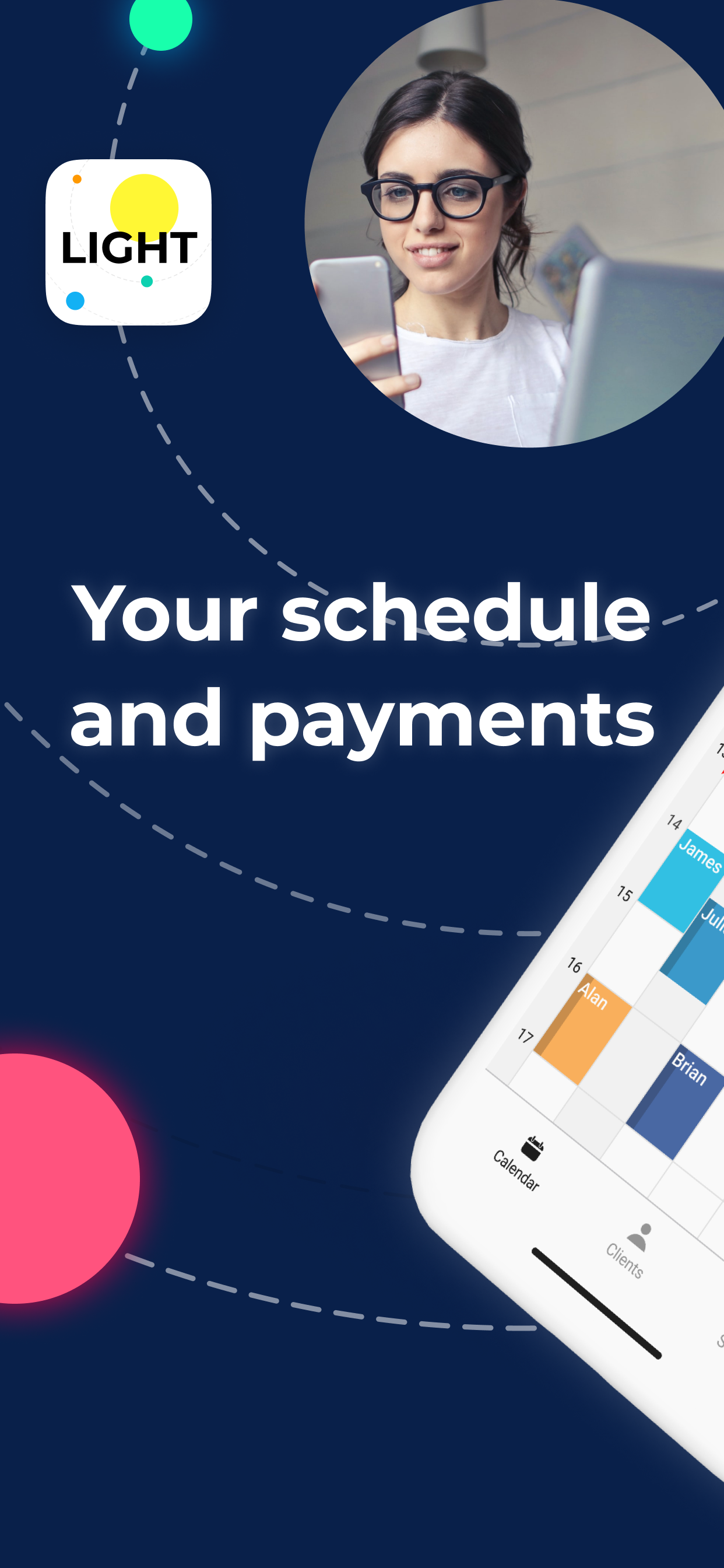
Light keeps a private tutor’s schedule and payments in one place. I co-founded it, designed it and ran it as a series of experiments.
Product co-founder — two of us: we shaped the product together; my co-founder led engineering, I led design, growth and the experiments.
- Product
- Schedule + payments
- Users
- 4,000+ paying users daily use, 6+ months
- Role
- Co-founder product, analytics, growth
- Constraint
- No outside money
The 10-second version
It was 2019, early in my career. I’d worked on established products and wanted to know what it takes to build one from zero. So I built one. On a tiny budget Light reached thousands of paying tutors who used it daily for at least half a year. We worked in fast iterations and let the numbers decide what to build next.
Finding the tutor problem
An average tutor has up to 20 students
-
01 Irregular payments
Students pay in chunks: a block upfront, then a catch-up after missed lessons. It is hard to know what has actually been paid.
-
02 Constant churn
Some students enrol while others stop, so the client base is always shifting.
-
03 No clear income
Tutors can’t say with confidence what they earn, which makes planning their finances close to guesswork.
Fifty emails, then fifteen interviews
I quickly built a simple landing page, ran cheap ads at it, and collected 50 emails from tutors who wanted the thing to exist. Then I ran 15 interviews, mapping how they actually work and how they feel about the money side of it.
The problem held up. Every tutor described the same mess in slightly different words, and none of them had solved it.
Research synthesis
Three tutor personas
-
 Vicky Beginner tutor
A student who tutors part-time: 4–6 lessons a week, 2–3 students. She keeps no records and relies on memory. Students sometimes pay ahead, sometimes owe her lessons, and after a lesson they ask how much is left. She pays for apps that clearly help, and has two or three subscriptions running.
Does
- Tries to remember the schedule and who has paid.
- Puts lessons in her calendar along with everything else.
- Digs through chat history and her banking app when a student asks.
-
 Maria Part-time tutor
Around eight students and other income besides. She expects students to keep track of their own payments, so she doesn’t worry about it much; the tutoring money blends into everything else she earns. Her schedule lives in a free calendar app, one colour per student.
Does
- Runs the schedule in a colour-coded calendar app.
- Leaves the counting of lessons to the students.
- Checks the banking app when something doesn’t add up.
-
 Michael Professional tutor
Five-plus years in, and his students refer their friends. He tried Excel and calendar apps to keep track of who had paid, found them too much hassle, and went back to a notebook where everything is visible at once. Money arrives unevenly: some pay ahead, others fall behind, so his savings are hard to plan.
Does
- Writes schedule and payments into a paper notebook.
- Sits down every so often to add up the month.
- Tried the spreadsheet route and abandoned it.
Building in weeks
A clickable prototype in front of tutors in the first week; an MVP they used every day, bugs and all, within three weeks. This was 2019 — years before AI assistance made that pace ordinary.
Schedule and payments, together
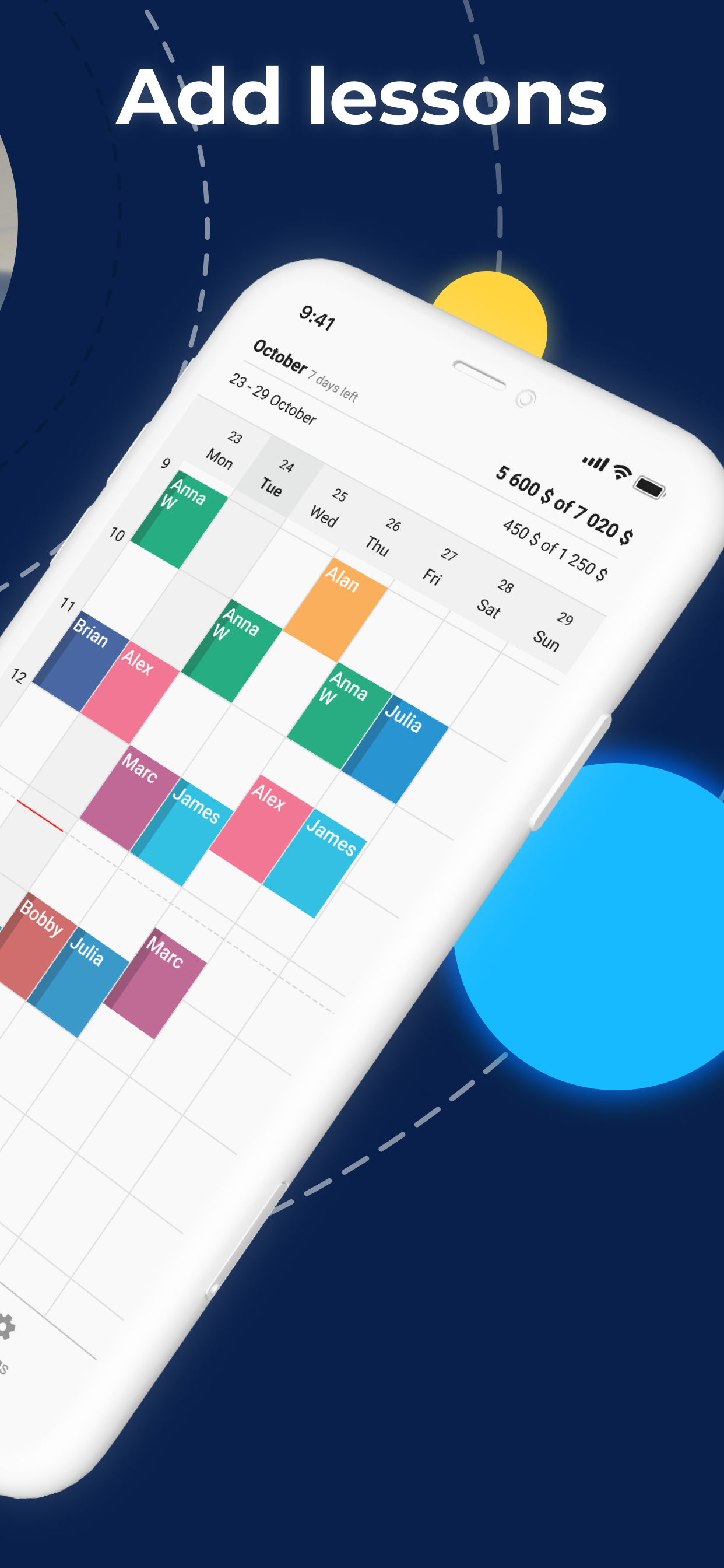
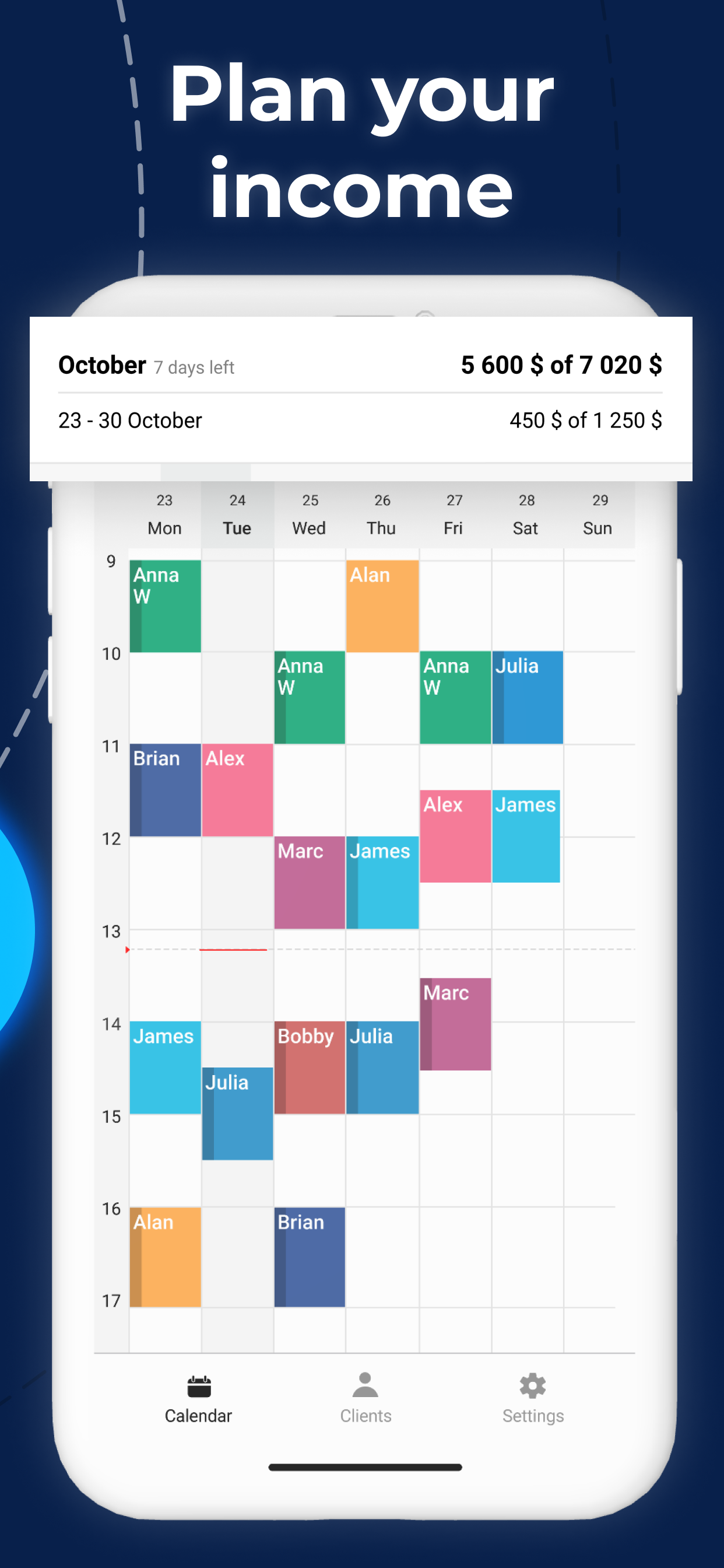
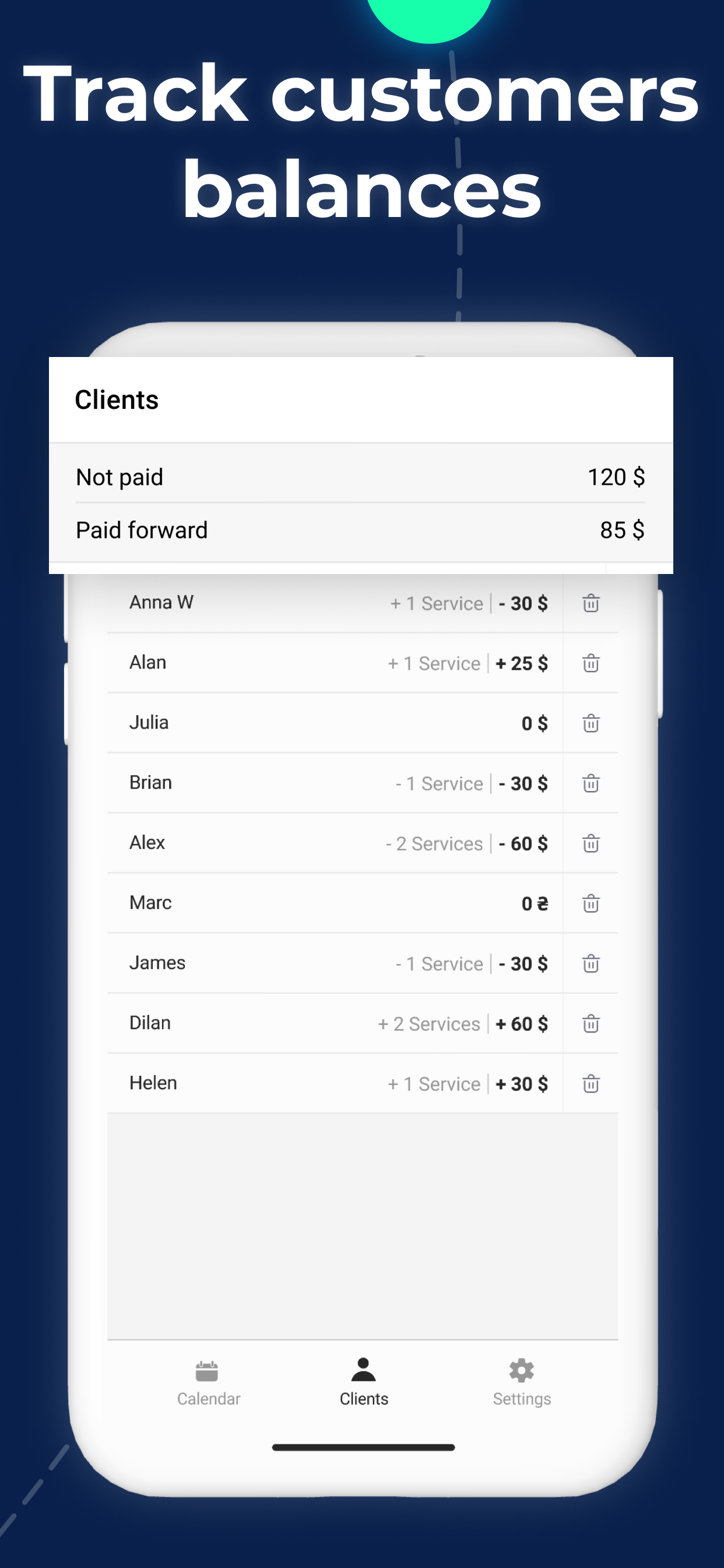
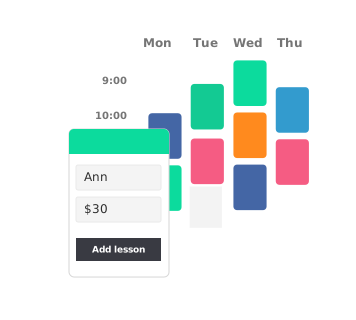
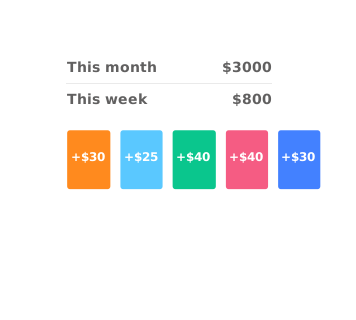
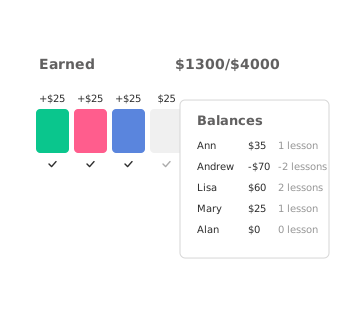
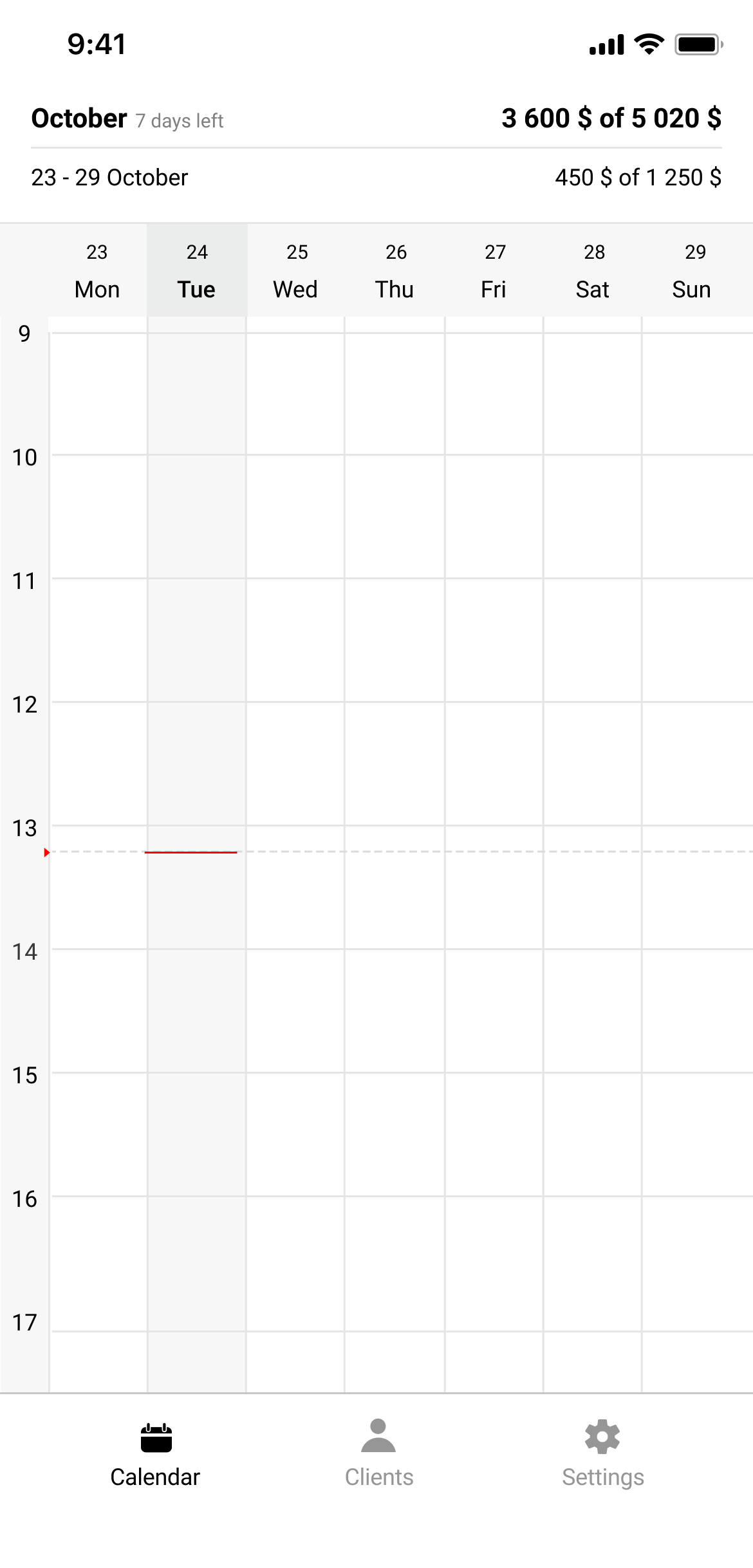
The whole product was one idea: schedule and payments together. Add your lessons, forecast income, track what each student has paid — in a single, light app.
Build only what daily use could prove
We held to three principles: simplicity (bright, light, minimal), speed of development (with few resources, build only what’s necessary), and constant contact with users (surveys, interviews, a community).
Speed meant something specific here: every screen was designed and coded from scratch, and a feature cost weeks rather than hours. Early ads confirmed the interest. Tutors wrote back that this was exactly what they’d been looking for.
How the launch landed
From idea to an MVP tutors used daily.
Install → activation (10 lessons added), first phase.
7-day retention, first phase.
Turning it into experiments
The app had been free. To see if tutors would pay, we added a subscription: $1.50/mo or $12/yr, with a free month. From there we moved in quick, measured iterations — each experiment aimed at the next bottleneck in the launch metrics, and later at the price itself.
Experiment 01
Onboarding
18%started a trial
The subscription was two weeks old.
It was the biggest lever in the funnel we could pull.
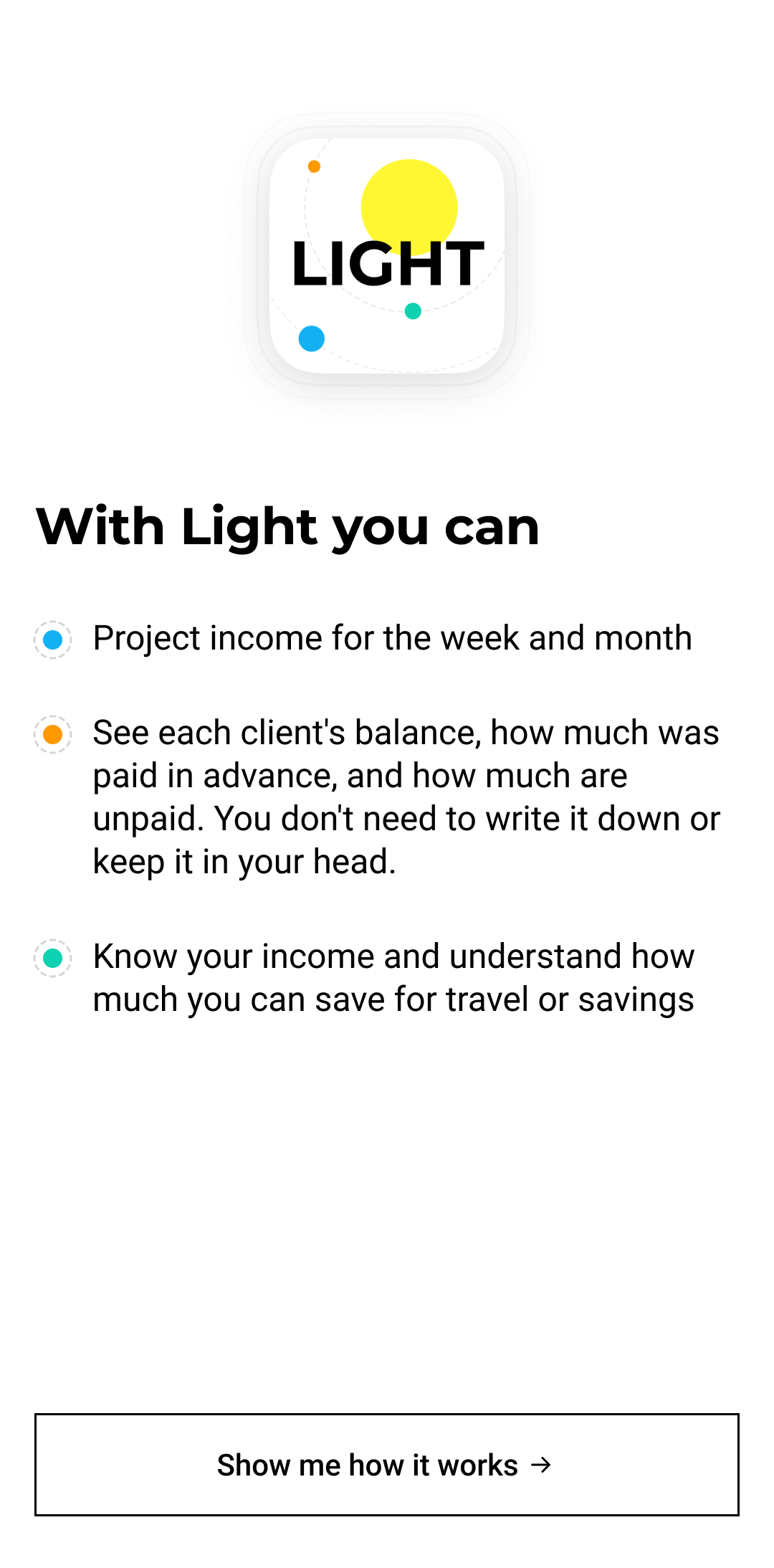
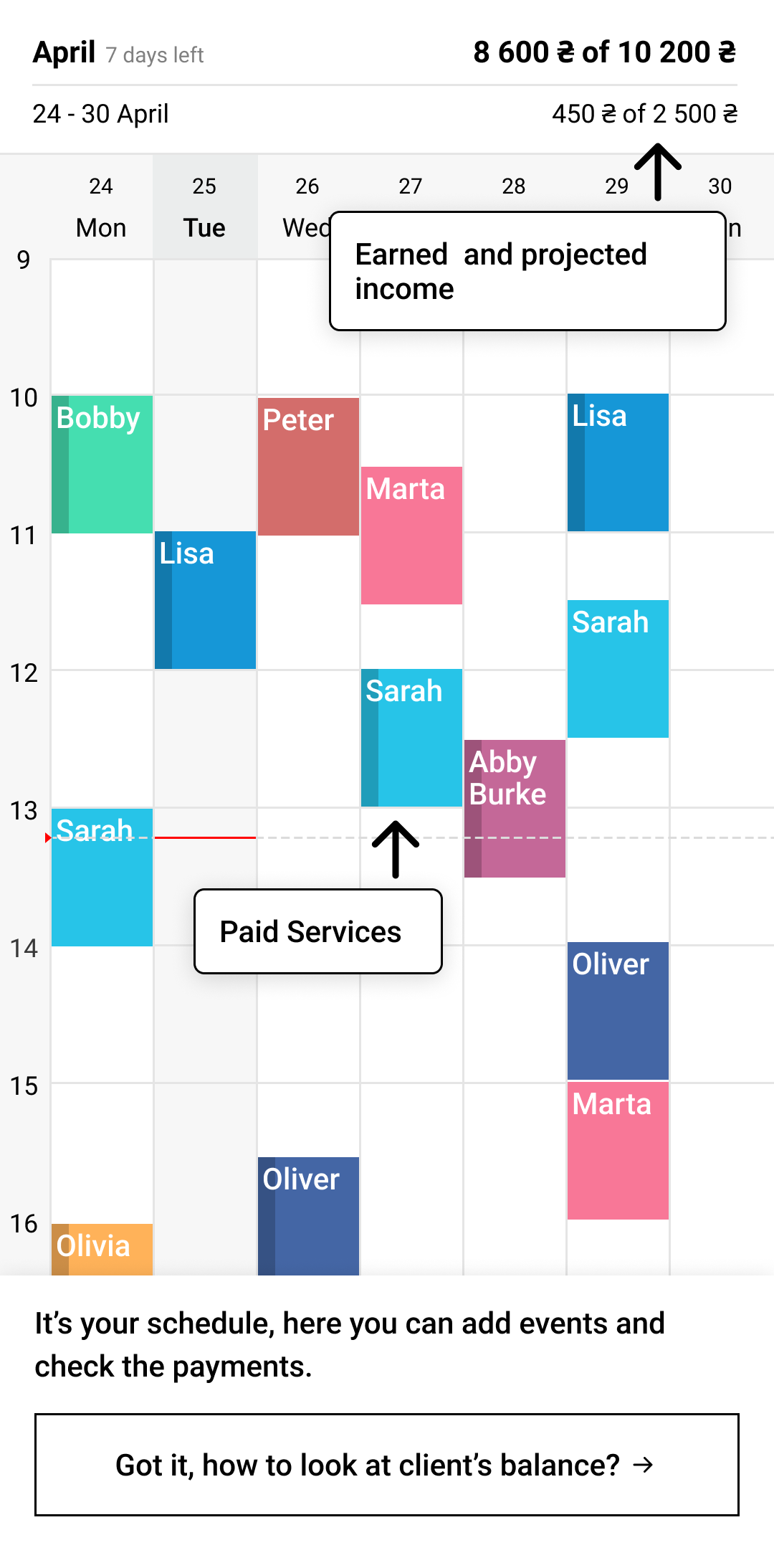
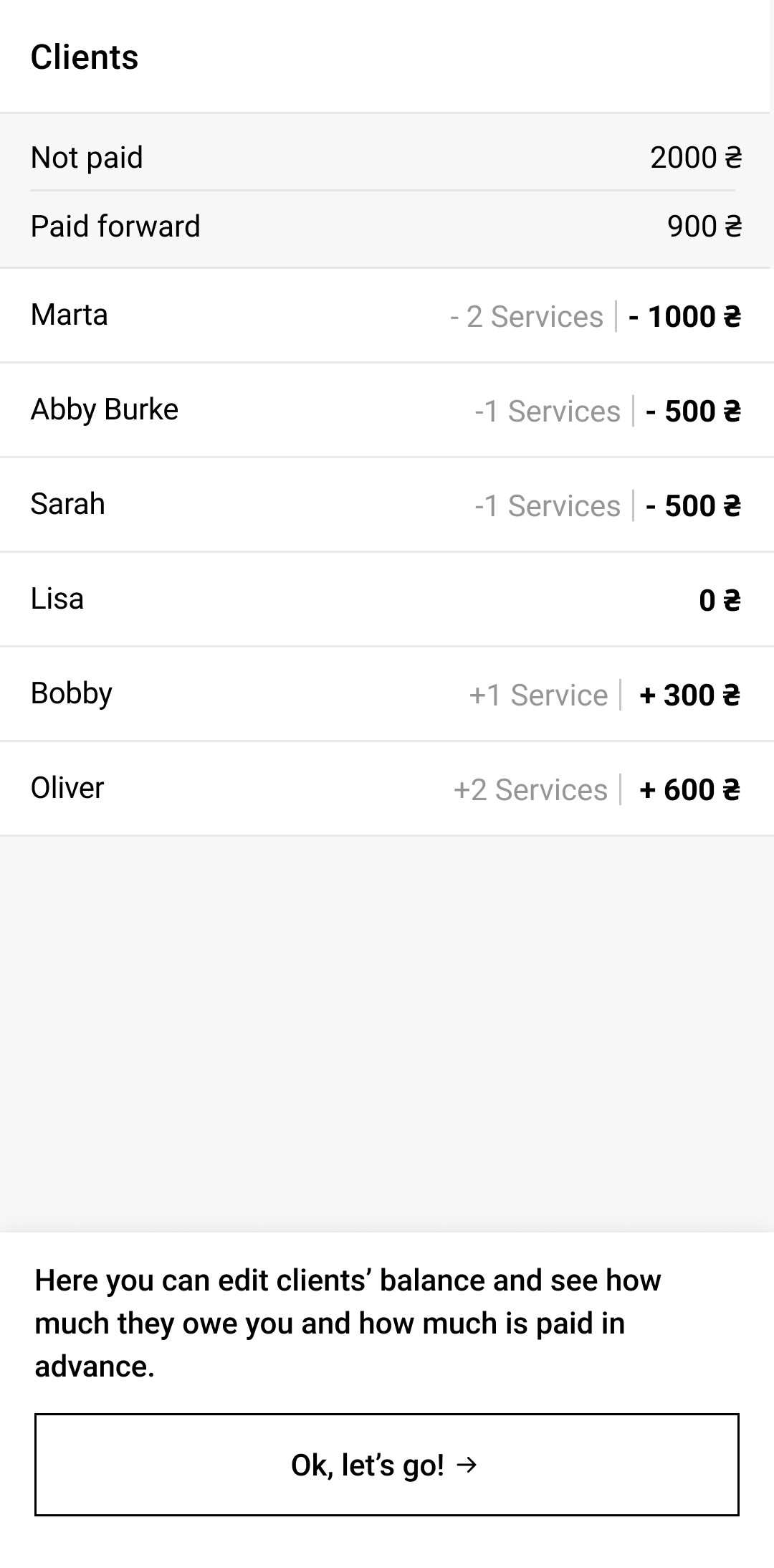
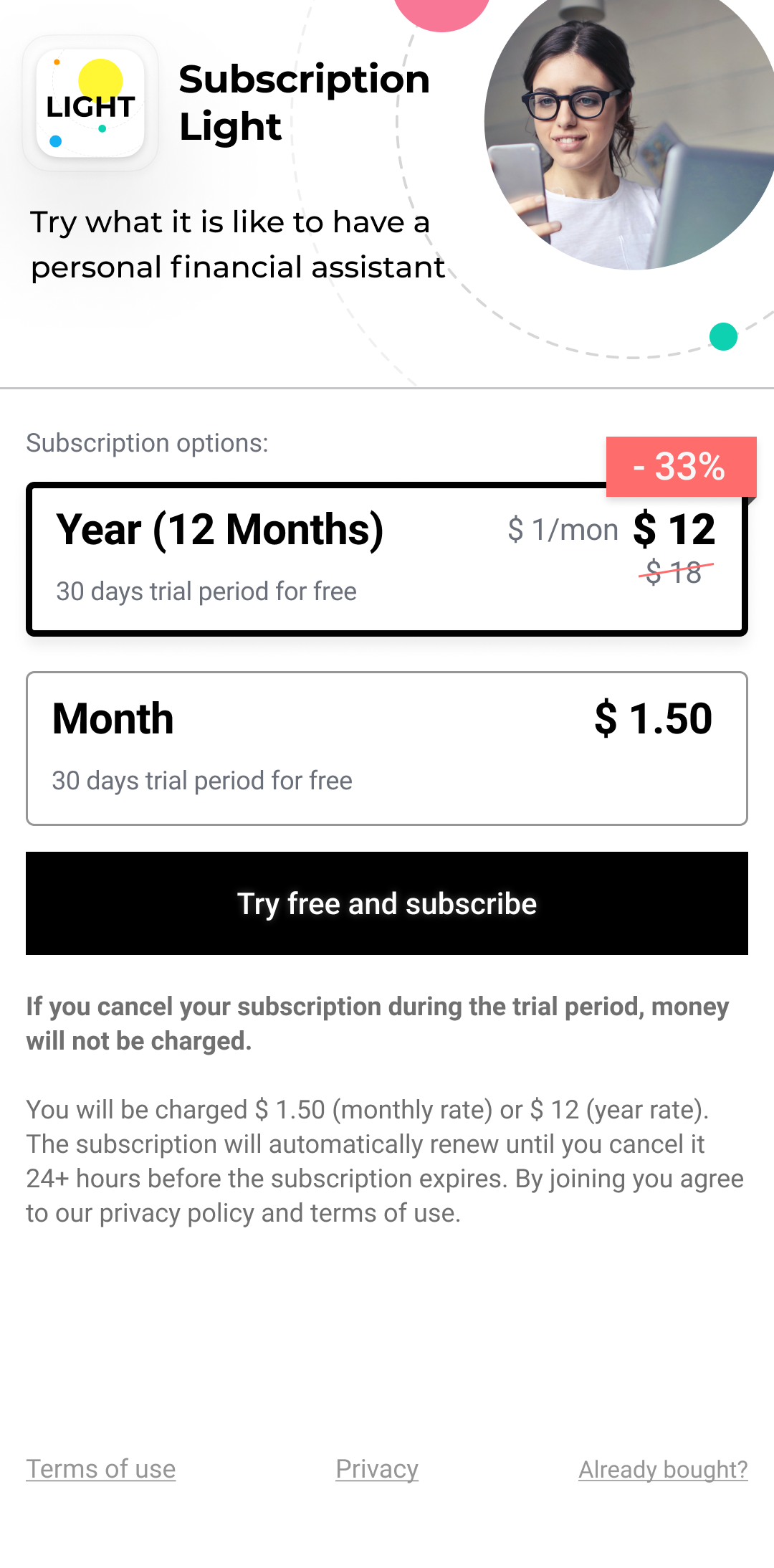
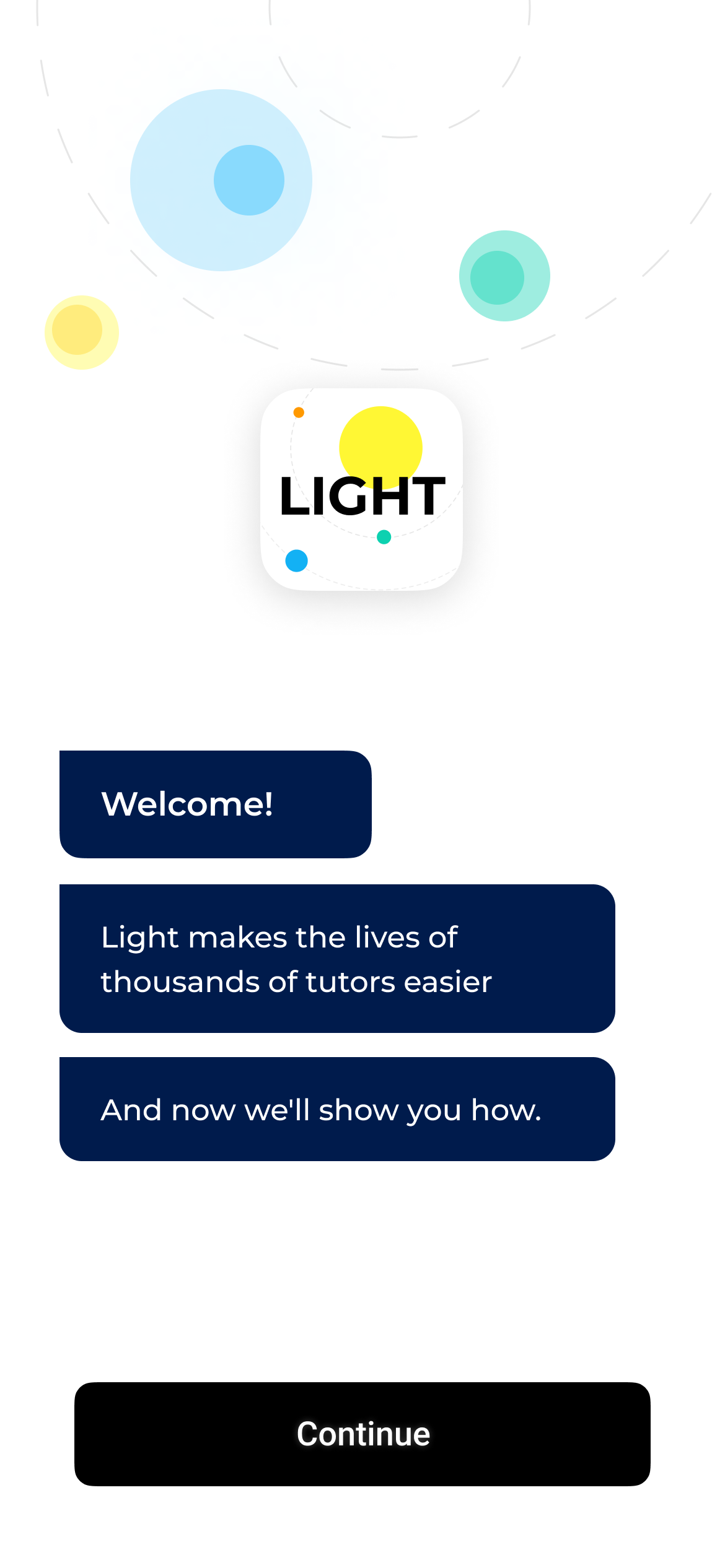
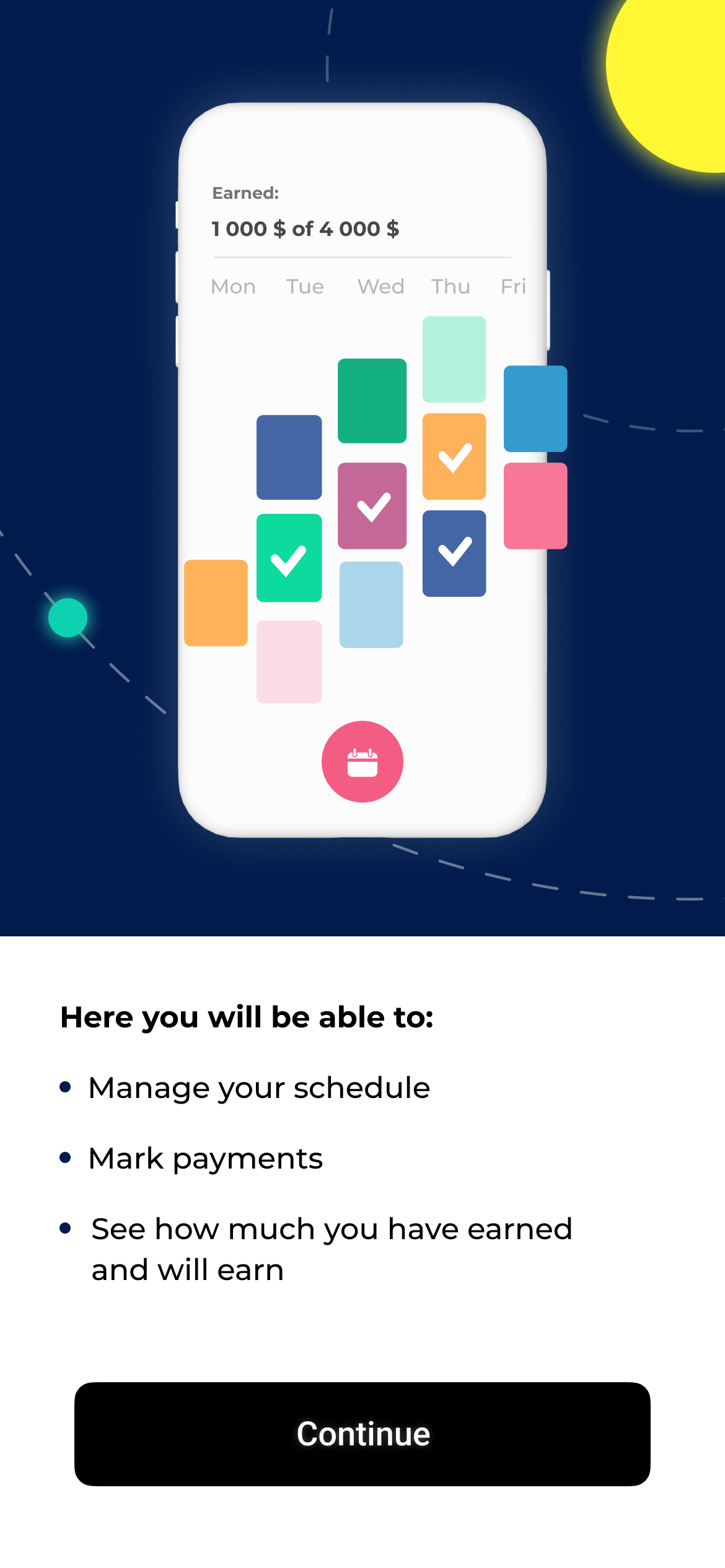
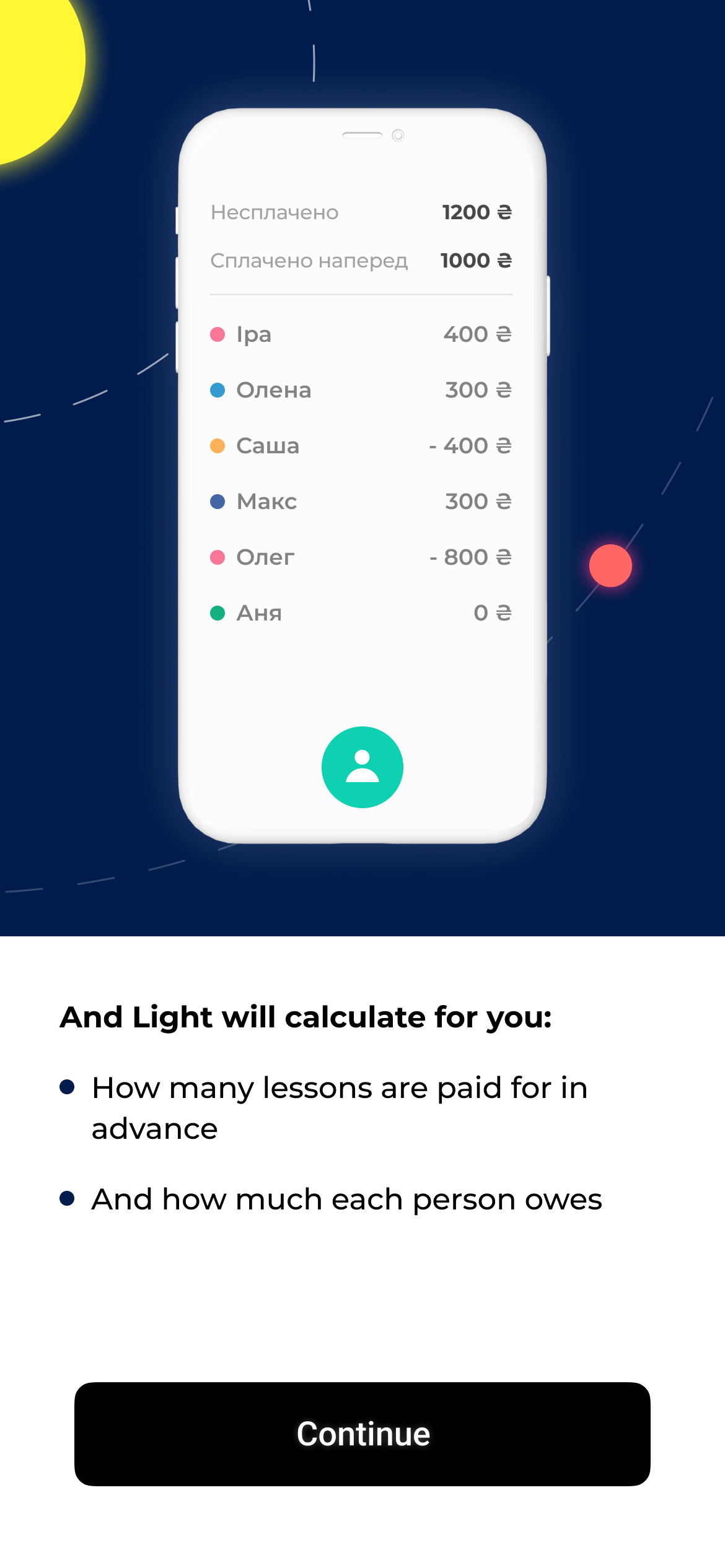
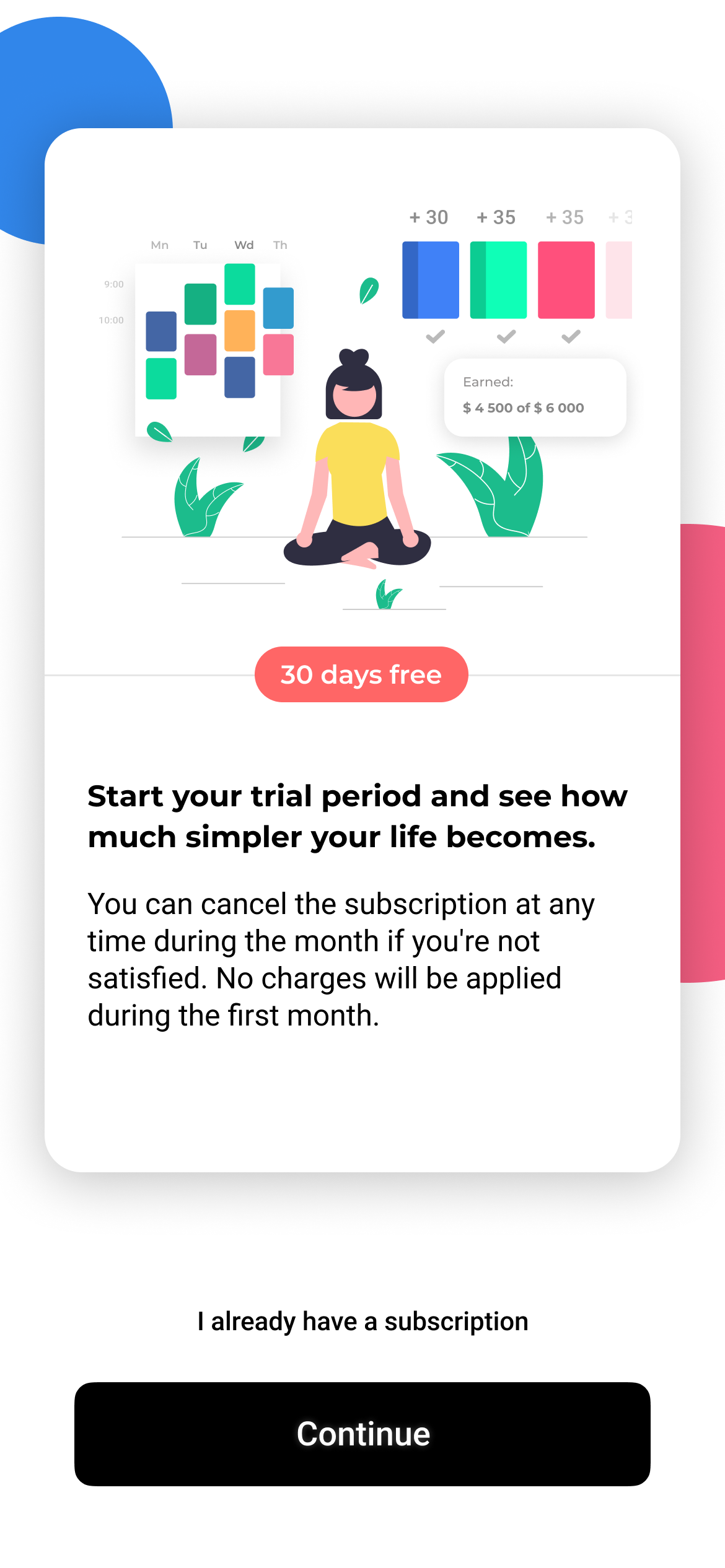
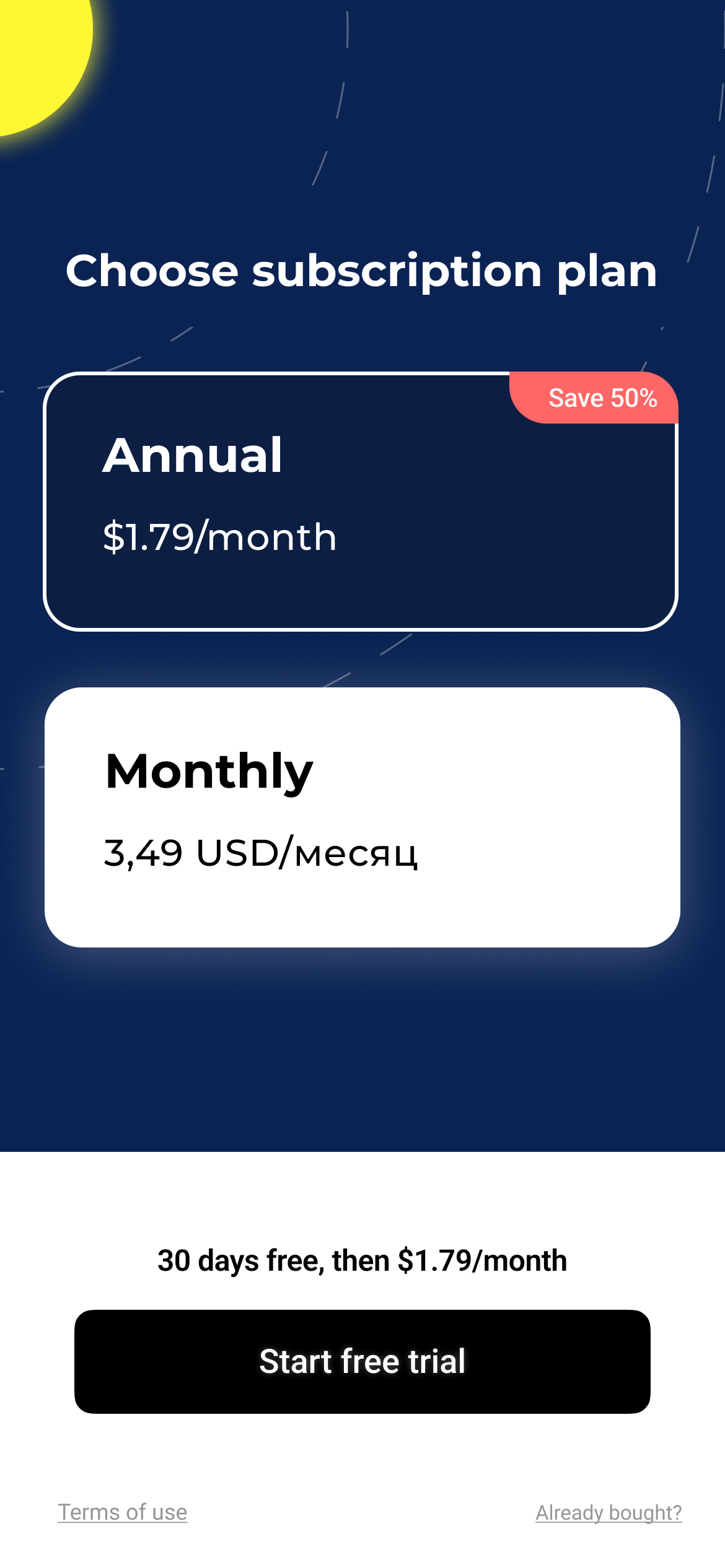
The onboarding at that point
It had been built to walk a demo group through the interface. The subscription shipped after it, and nobody touched it.
Whatever the channel was bringing in, it was mostly tutors. On that base, 18% looked low.
I thought we would get to 50%. I have always been an optimist about numbers — bad for forecasts, good for actually building things.
Install → trial
60–70%of installs used the app before the subscription existed
18%started a trial at launch
22%the baseline by the time the redesign was measured
Three hypotheses about the drop-off
- Trial value. A month with Light is worth having on its own. Show what the product is good for, not what it does.
- Understanding the trial. People don’t know they can cancel and still use the month to the end. Say it plainly: it’s paid, the first month is free, cancelling is one line.
- Jobs, not features. What if we stop explaining how to use it and say what it’s for?
What the flow was actually selling
Not a feature list. What it is like to run your week this way for a month: the schedule and the money in one place, and less to keep track of.
Its goal was the other one: not how the app works, but what it is worth.
Install → trial
22% → 30%
Eight points. The next bottleneck was activation.
Try a month of not keeping it in your head.
The promise, as bulletsinstalls
How the calendar works
How balances work
The decision18% started a trial
Where the flow lands
Opens with what a tutor gets, not what the app has
Your week, and what it has earned
Who owes you, and what is already paid ahead
Experiment 01
Onboarding
18%started a trial
The subscription was two weeks old. It was the biggest lever in the funnel we could pull.
It had been built to walk a demo group through the interface. The subscription shipped after it, and nobody touched it. Whatever the channel was bringing in, it was mostly tutors — on that base, 18% looked low. I thought we would get to 50%. I have always been an optimist about numbers: bad for forecasts, good for actually building things.
of installs used the app before the subscription existed.
started a trial at launch.
the baseline by the time the redesign was measured.
Three hypotheses about the drop-off
- 01
Trial value. A month with Light is worth having on its own. Show what the product is good for, not what it does.
- 02
Understanding the trial. People don’t know they can cancel and still use the month to the end. Say it plainly: it’s paid, the first month is free, cancelling is one line.
- 03
Jobs, not features. What if we stop explaining how to use it and say what it’s for?
What the flow was actually selling
Not a feature list. What it is like to run your week this way for a month: the schedule and the money in one place, and less to keep track of.
Its goal was the other one: not how the app works, but what it is worth.
Install → trial
22% → 30%
Eight points. The next bottleneck was activation.
Try a month of not keeping it in your head.
The next bottleneck was activation
We later doubled the price and install-to-trial settled around 25%. Still healthy, so I turned to activation. I found the “aha” moment was creating 10 lessons: after that, about 70% of users subscribe. The question was how to get more people there cheaply.
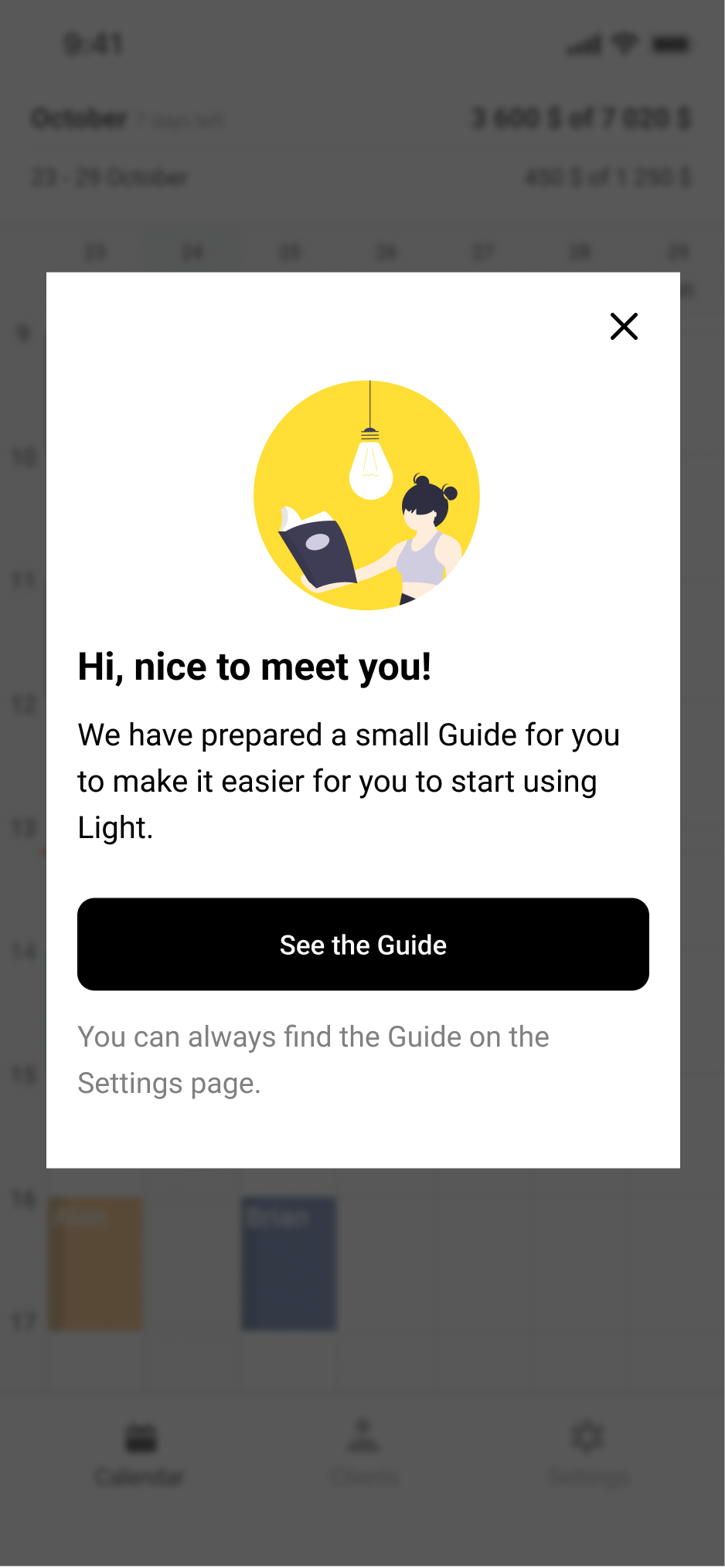
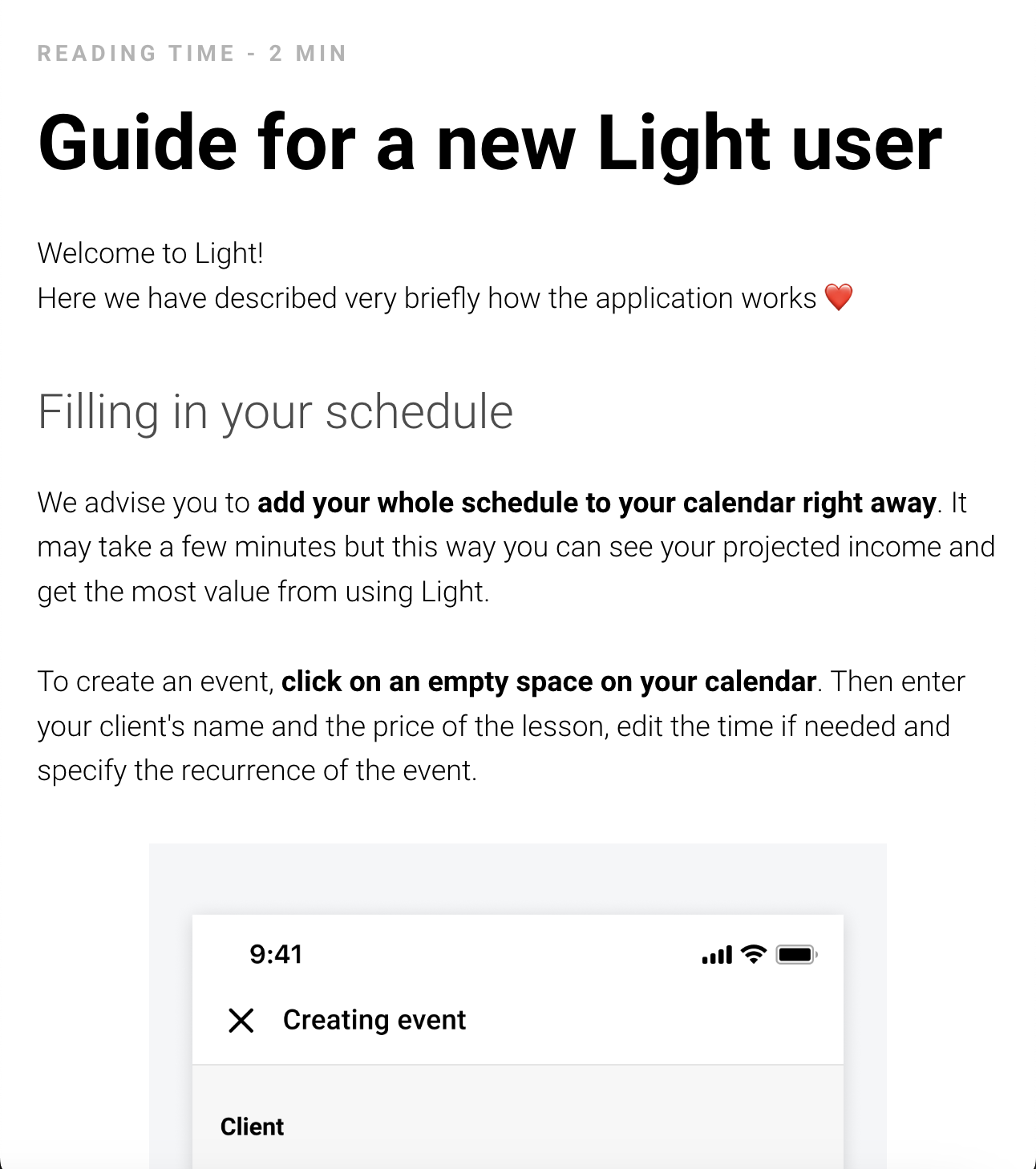
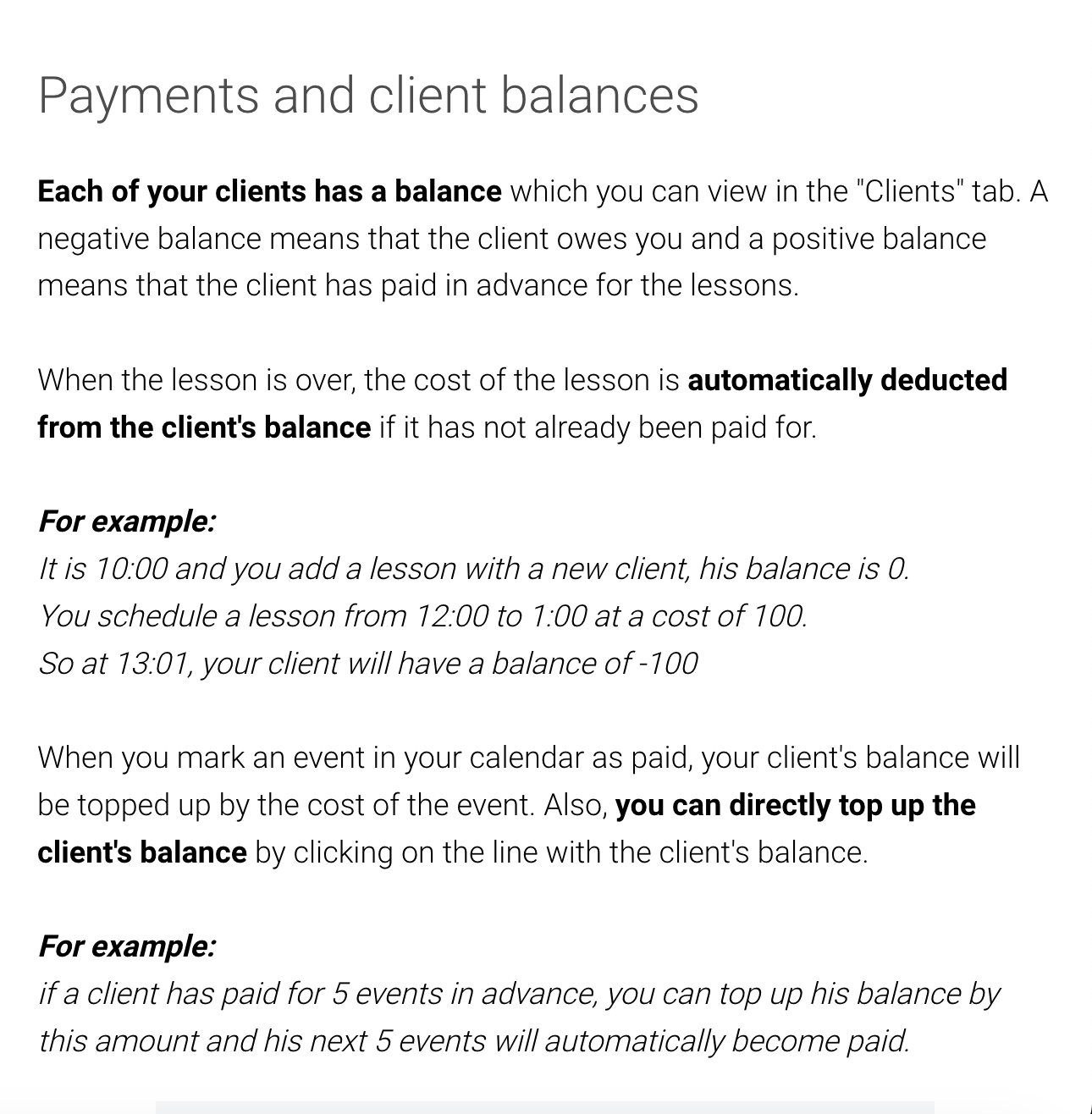
I interviewed community members about their first-use experience, then built a simple web guide and added an in-app modal linking to it. The guide's job was narrow: push toward those first 10 lessons, with real examples of how good it feels once Light is actually set up.
The “aha” moment: reach it, and ~70% subscribe.
Trial → activation, after the modal and the guide.
of people who saw the modal opened the guide.
Growing, then stopping
Community-led acquisition
The community became the channel
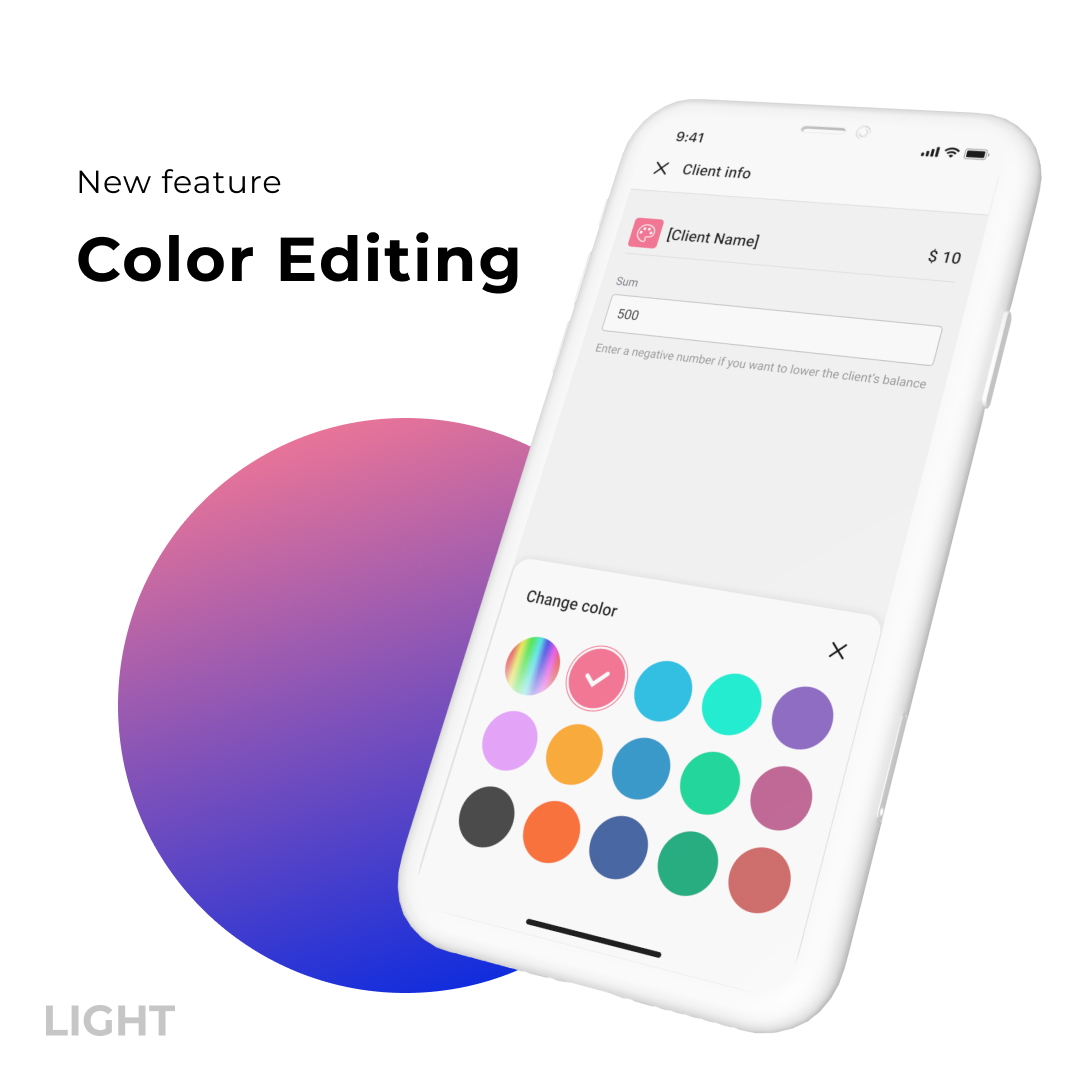
I built an Instagram community for tutors and worked out the content categories together with them. The bet was that tutors would help make the content, and they did: in “Light Stories” they told how they started tutoring, or how they work with children and with adult students.
The community opened the door to tutor influencers. And it worked in the off-season: tutoring goes quiet in July and August, so we acquired users then and activated them in September, when everyone comes back.

A real product, a small market
The market was too small for the business model we wanted, and it was hard to make it attractive to investors. So we tested three pivots: getting into the tutoring-platform market next to Preply, selling something to students, and translating the app to run experiments in other countries. None of them reached sustainable numbers.
I made about 10 pitch decks along the way, and we passed the first selection round at the Ukrainian Startup Fund. Then the war began. We stopped working in the Russian market, the Ukrainian one shrank, and we chose to wind down active work.