
Empower Your Data
Research Teams
Internal platform for data analytics teams — covering project setup, asset marketplace, and budget management at 20,000-user scale.
My role: Product Designer (2020-2023)
This project is an internal product for the #1 most valued brand in the consulting industry globally. It's a platform designed for data analytics teams.
Within the platform, users can create projects, invite collaborators, connect services, handle payments, monitor costs, and give clients access to research results. There's also a section for publishers, where they can create publisher teams, publish assets, provide support, and get information on asset usage. The target audience for this product is around 20,000 users.
Main sections
Project
Marketplace
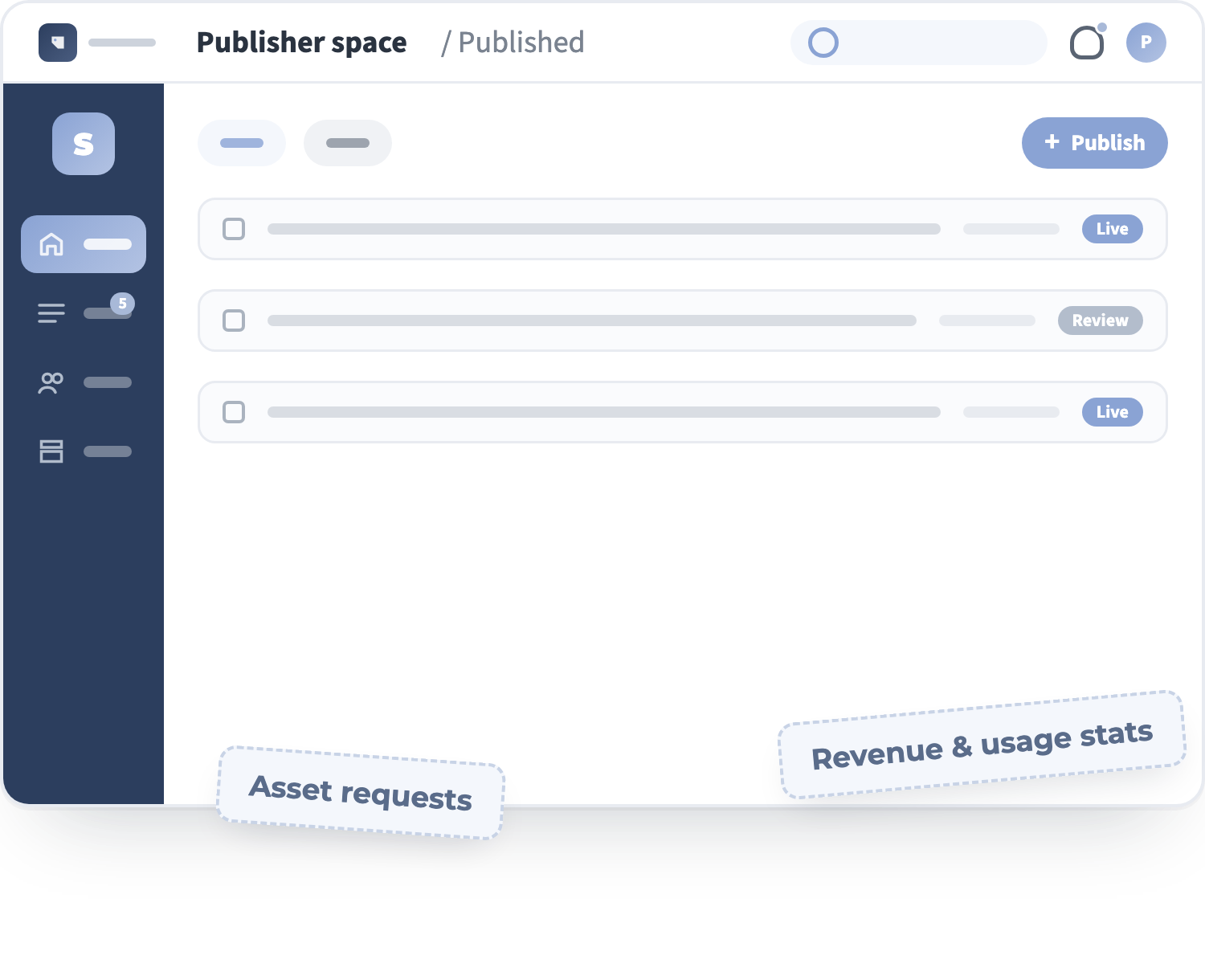
Publisher space
What were the first steps?
Initial conditions:
The platform was originally developed by another company and later acquired for internal usage. It had very basic functionality that didn't fully cover actual user and business needs.
But we had some initial user base as the platform was helpful for some types of engagements.
At the initial stage, it was important to define the expectations and goals of the business. I proposed conducting several stakeholder interviews and assisted in moderating the workshop.
How did product look when you finished your job there?
Project:
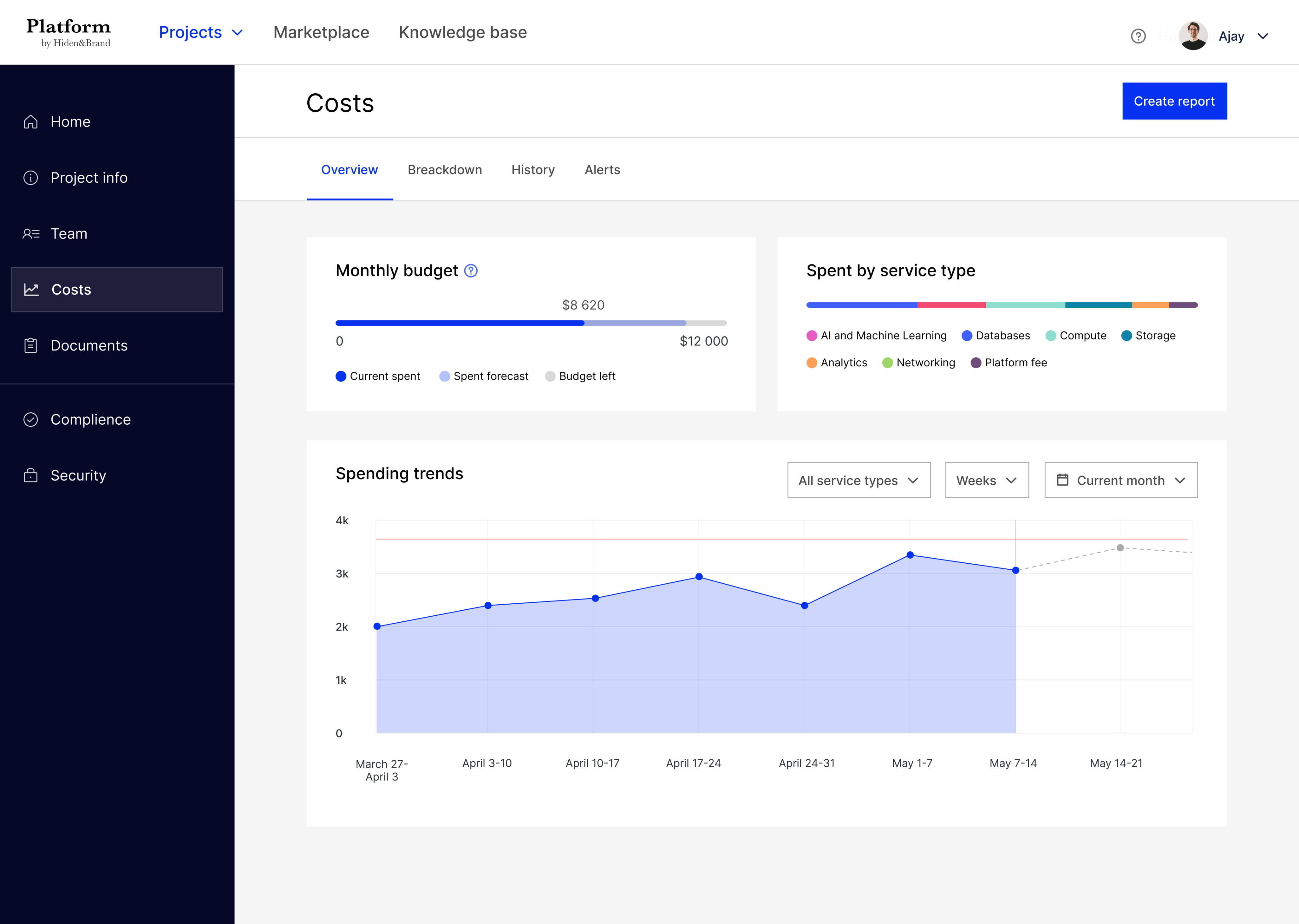
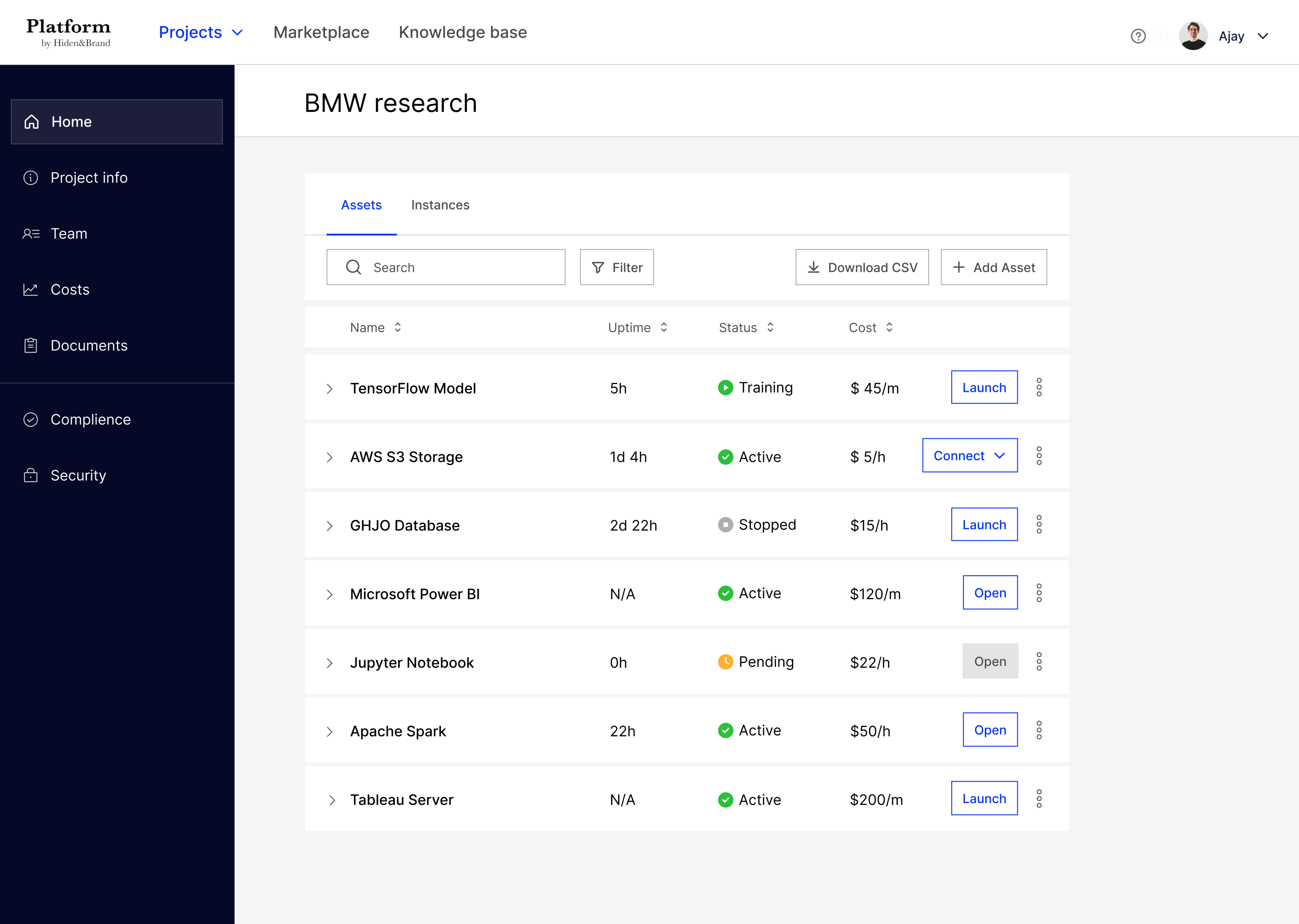
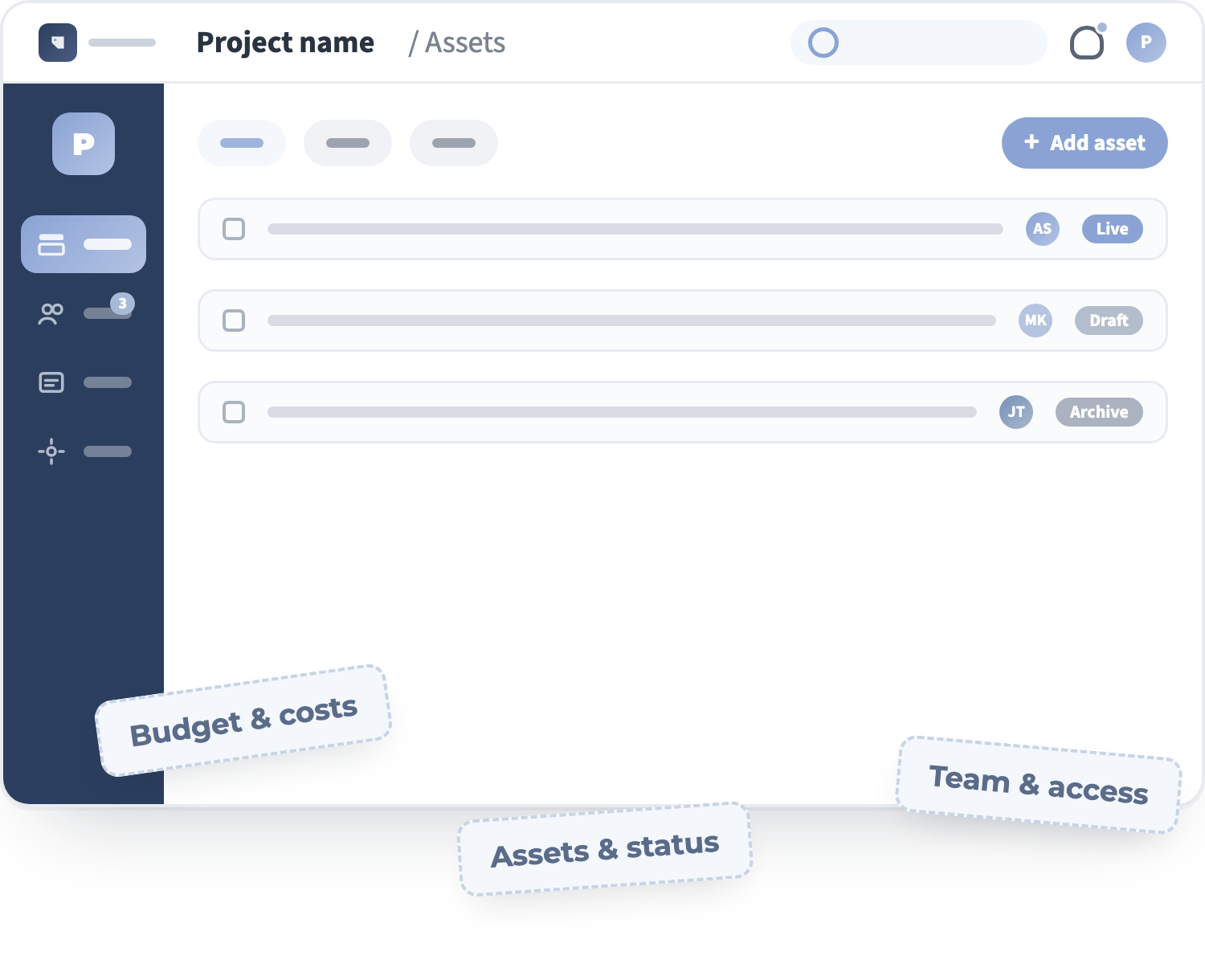
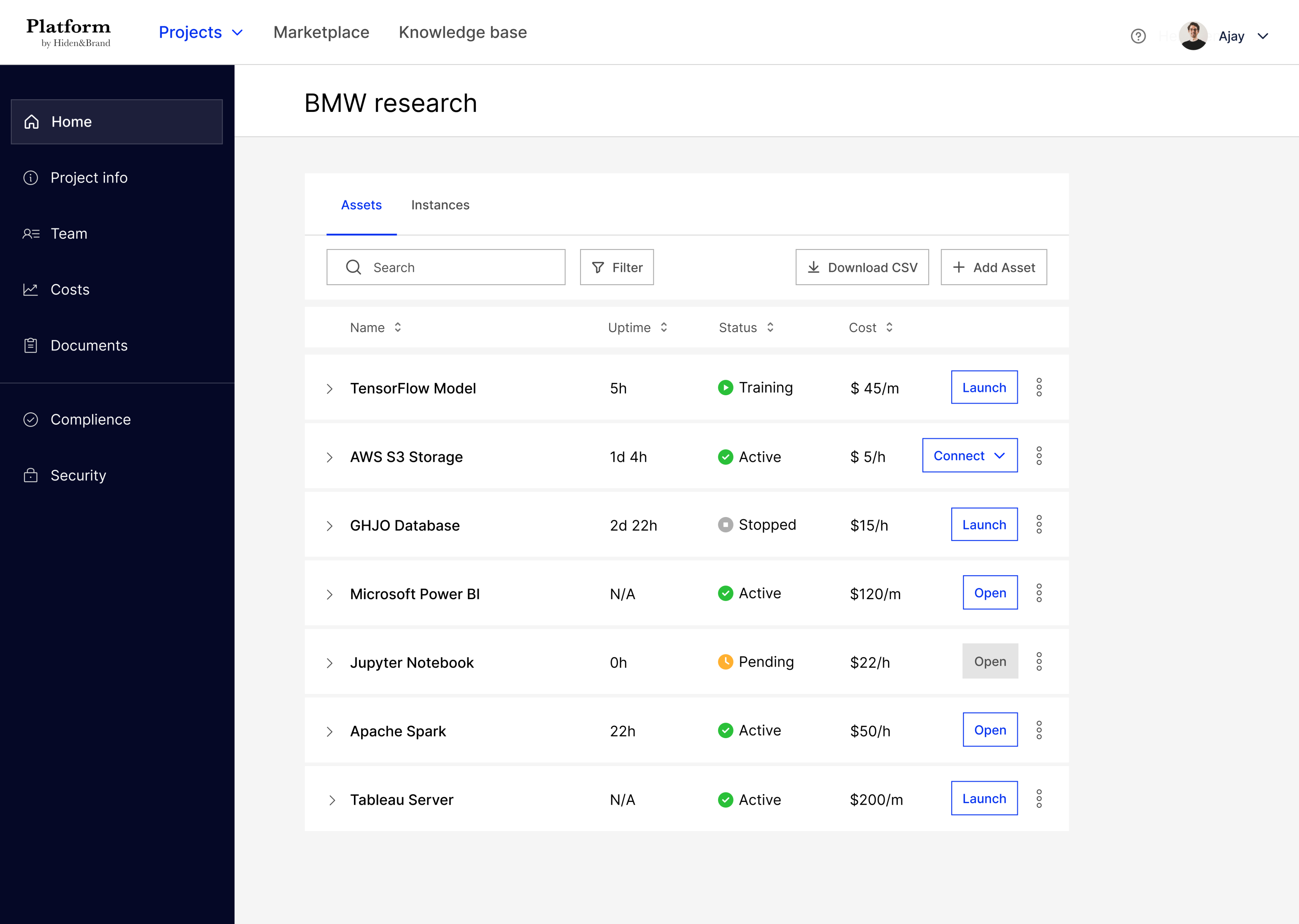
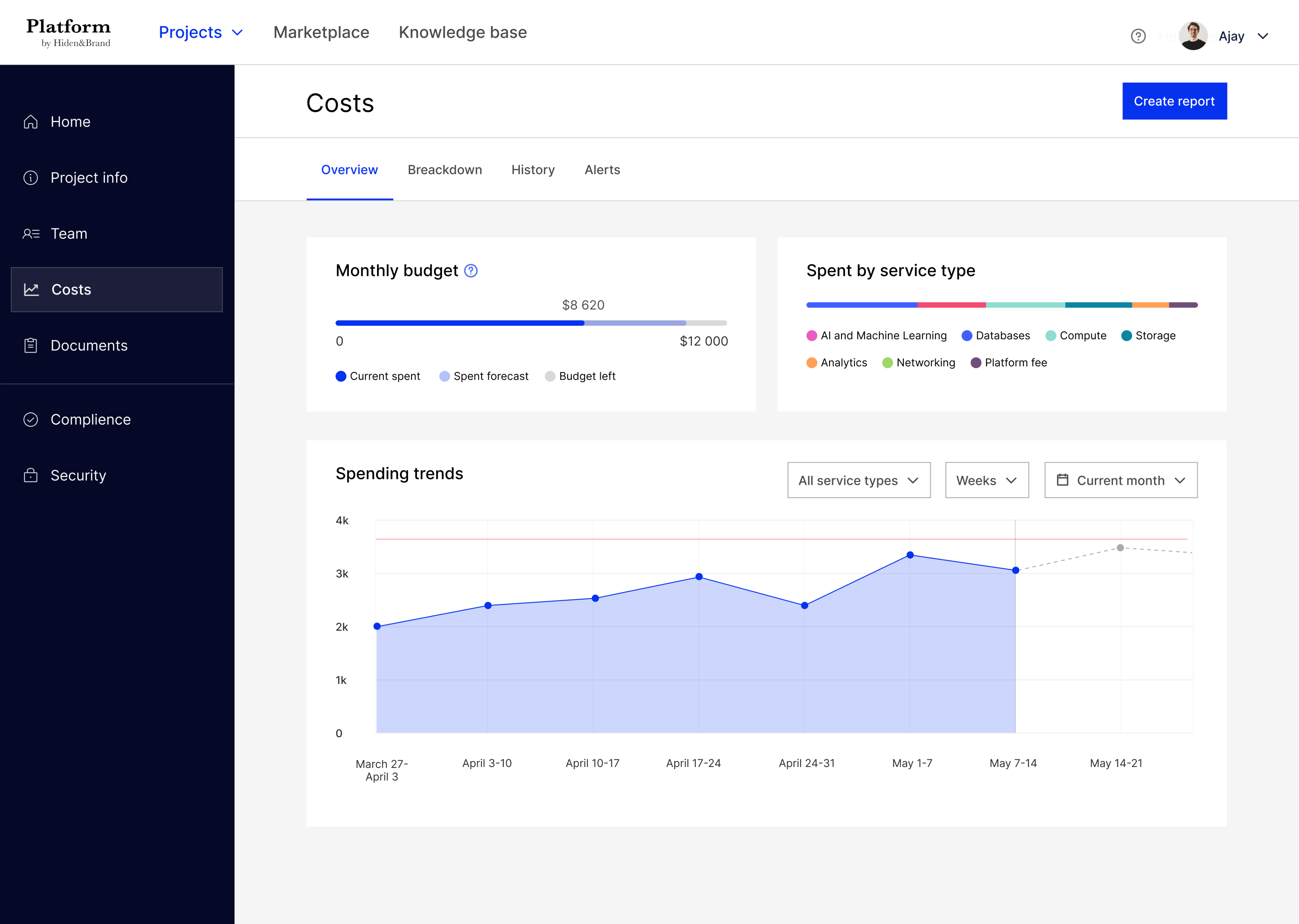
This is the main entity of platform, created for each new client engagement. Within a project, you can monitor asset status, budget, edit the access levels, manage the team and the project info.
Project
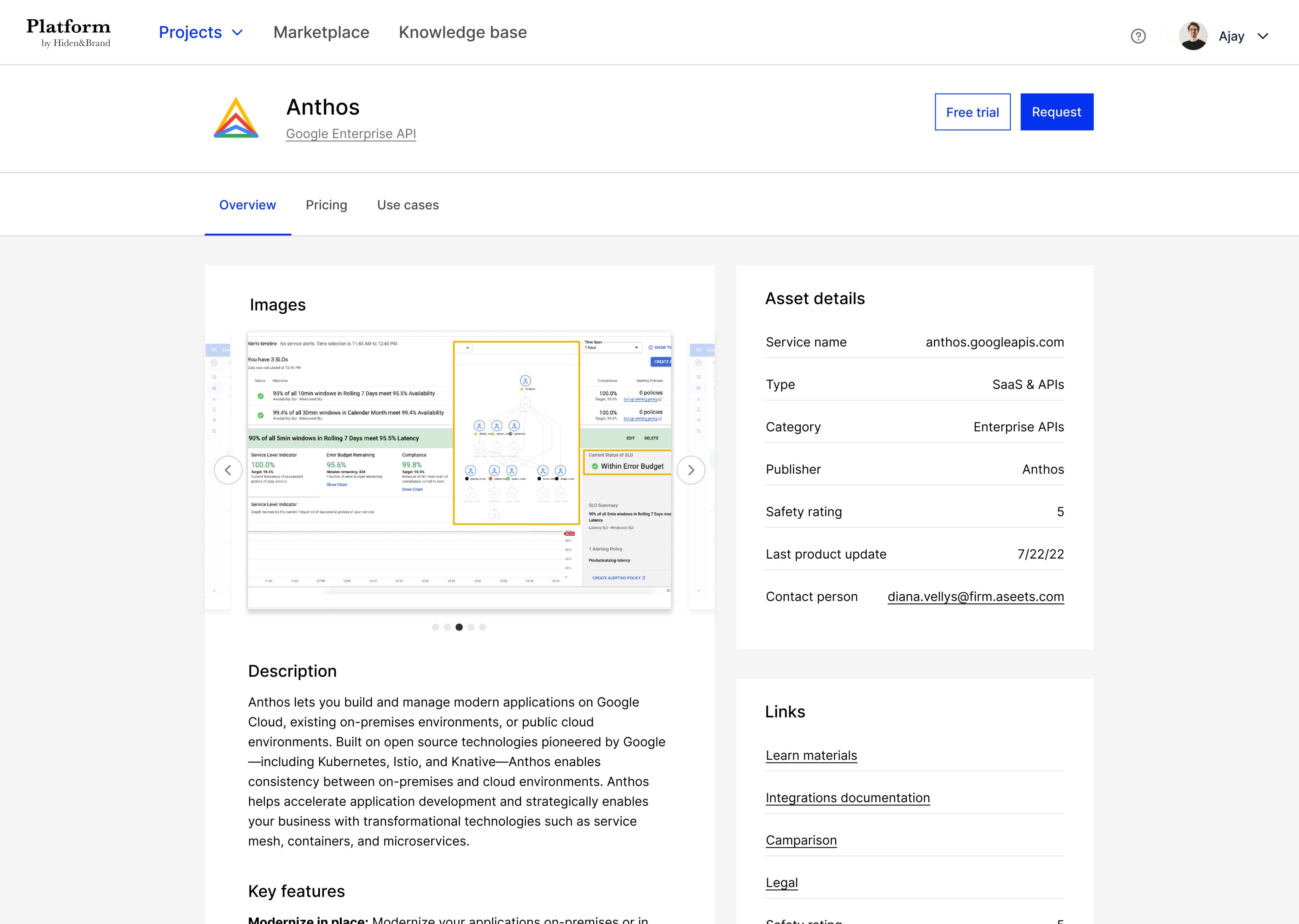
Marketplace:
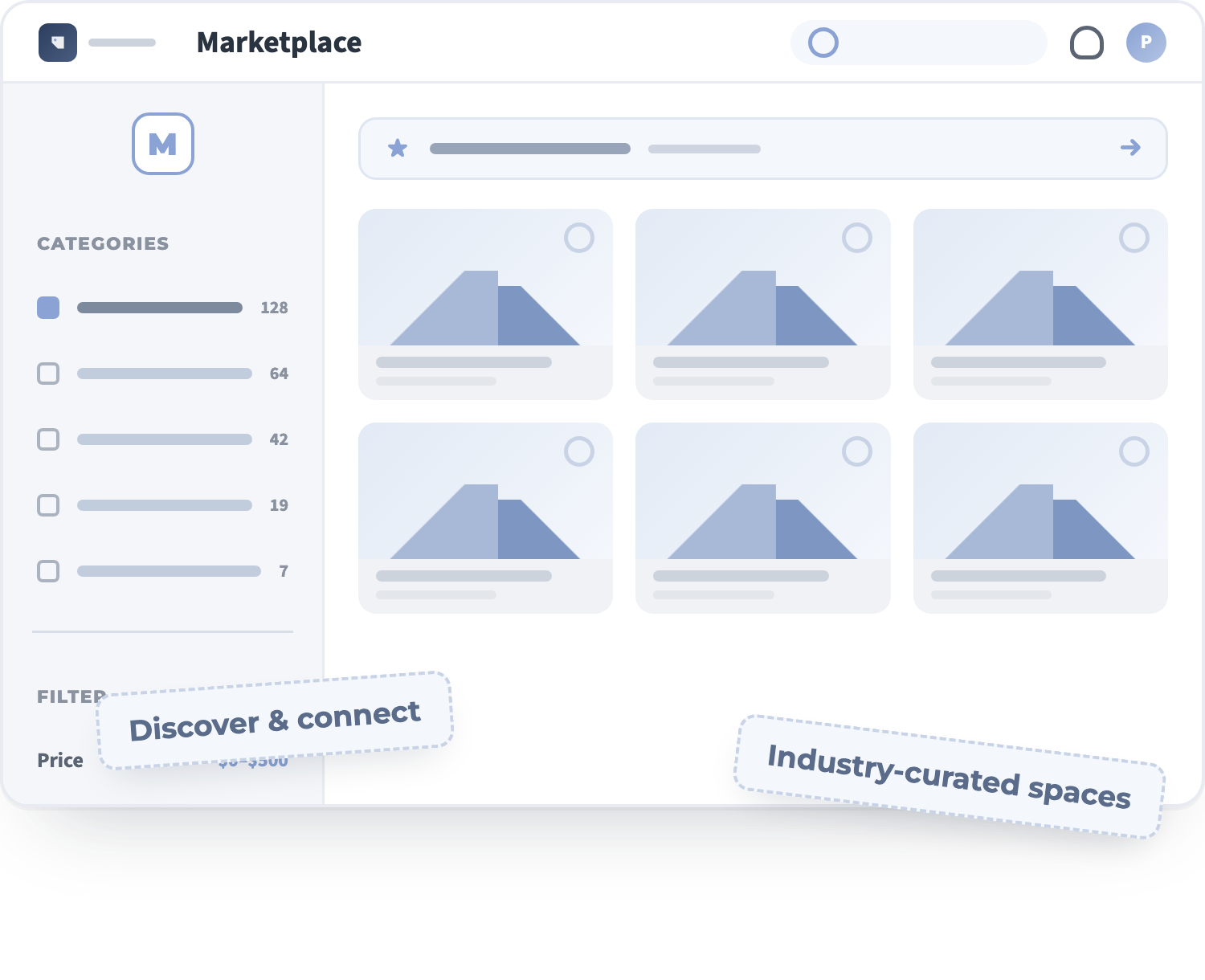
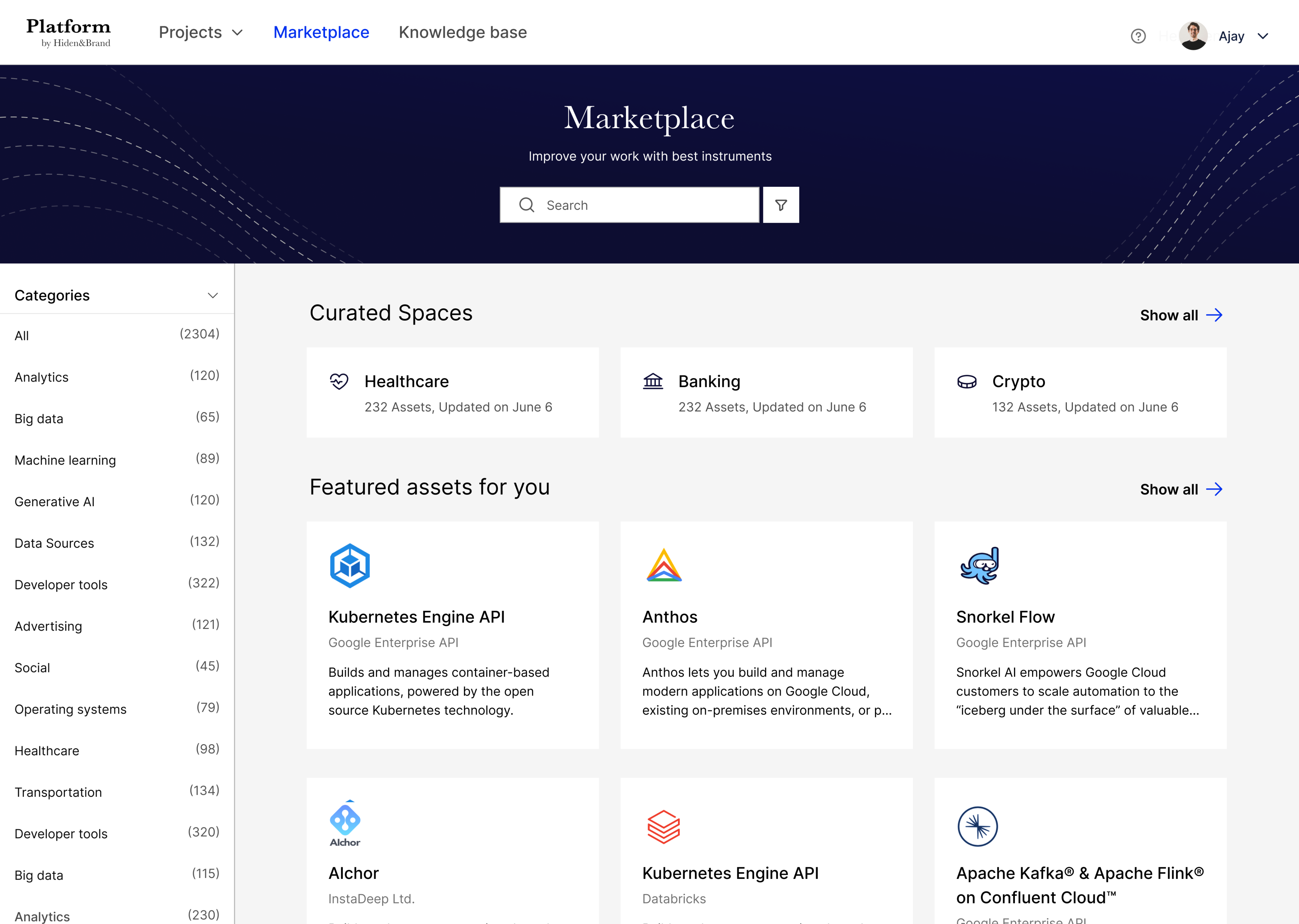
Here, you can find and connect assets, learn additional details about their use, and visit curated spaces for specific industries.
Marketplace
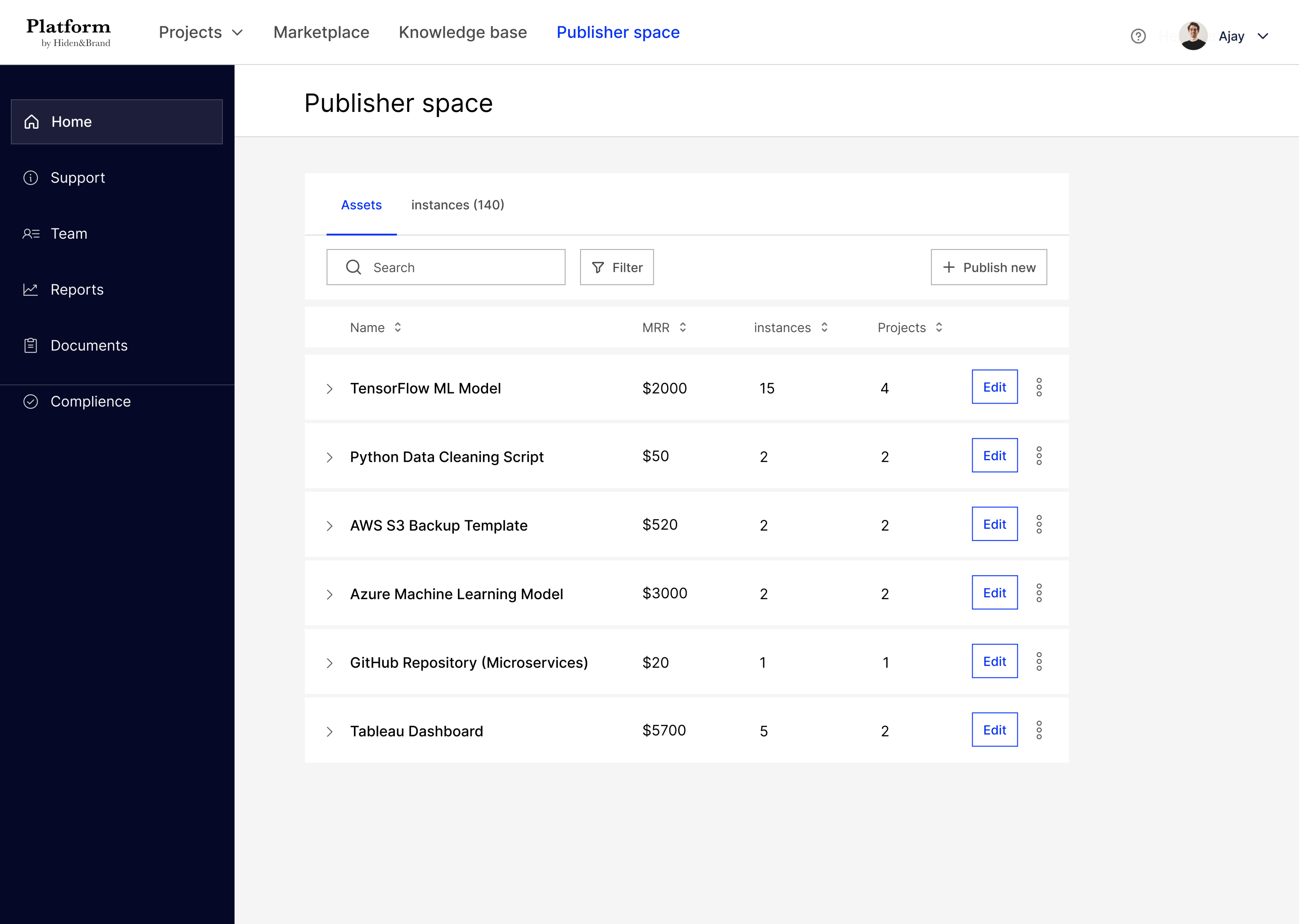
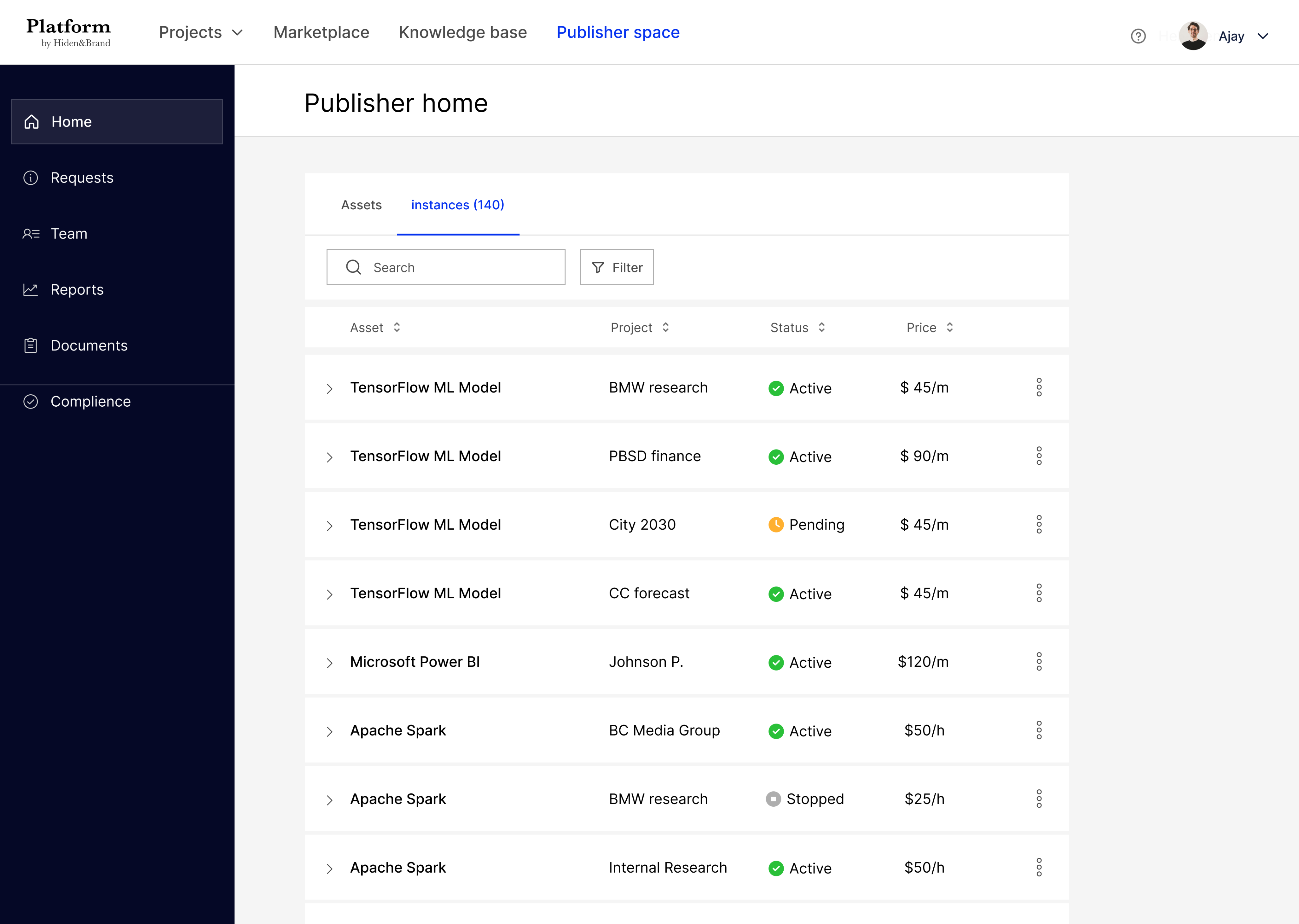
Publisher Space:
Engaging users in the creation and distribution of their assets was crucial. Publishers can view requests for assets, support requests, see statistics on revenue and usage, and publish new assets.
Publisher Space
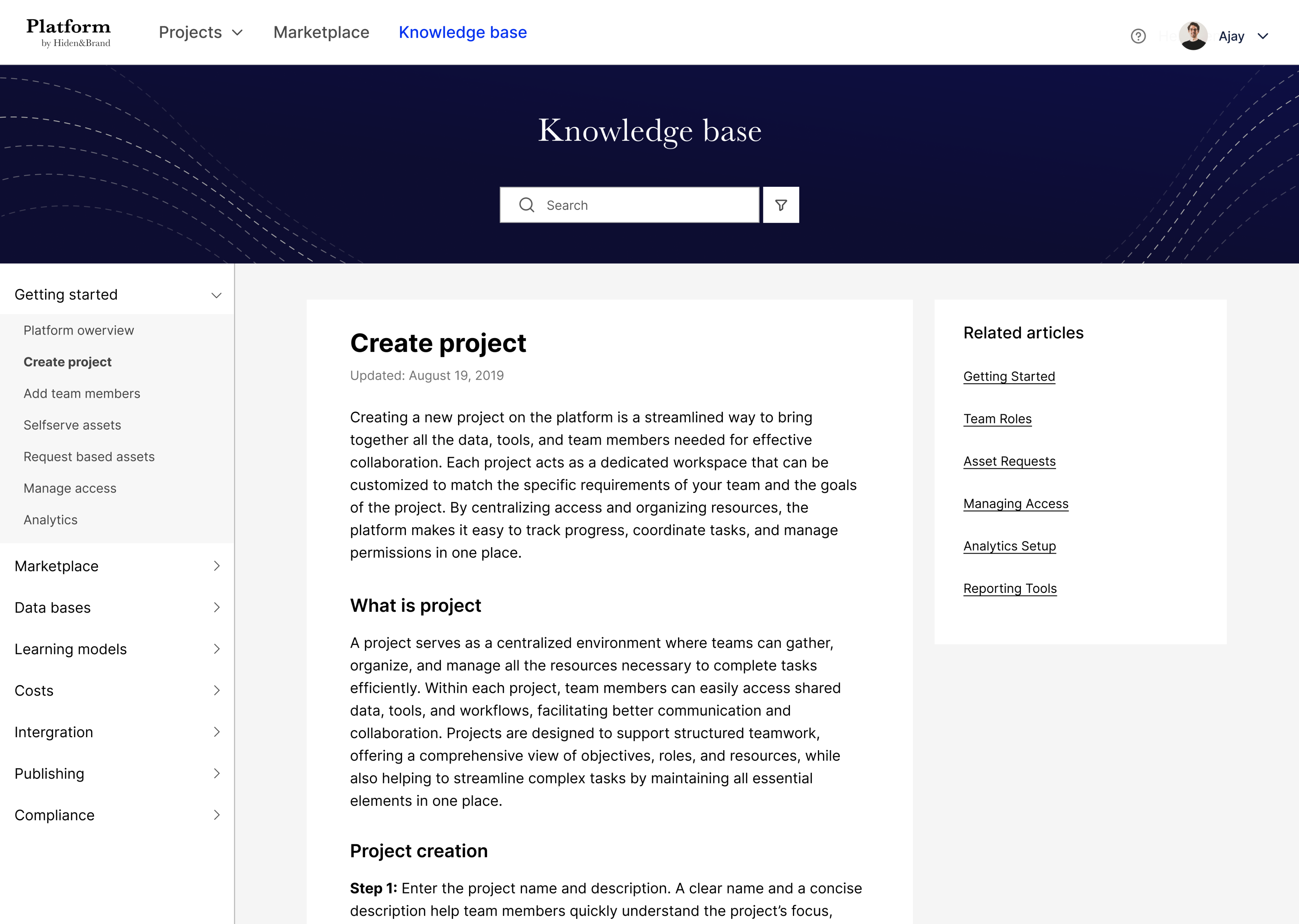
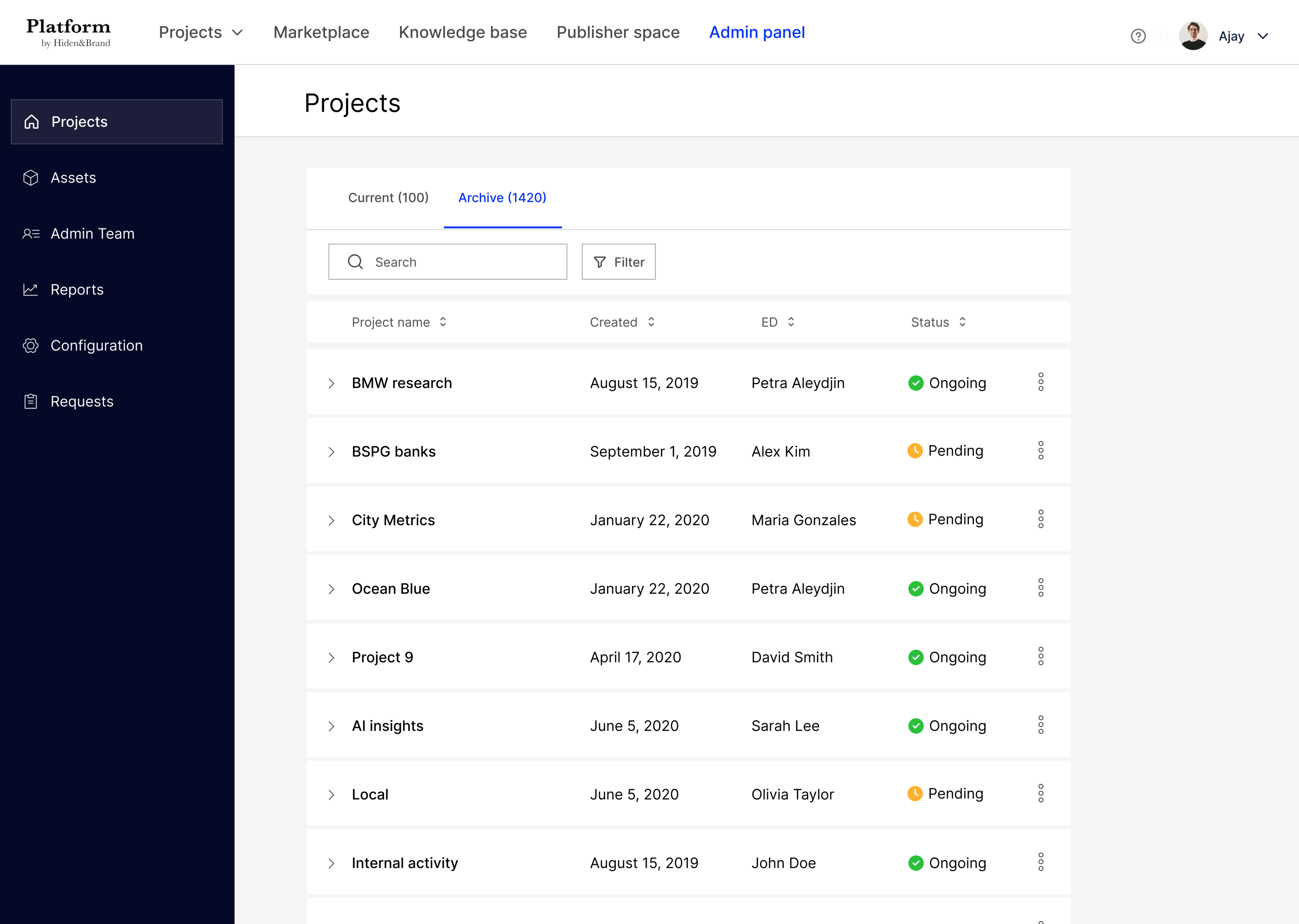
I was also involved in creating a knowledge base and an admin panel for the platform.
Other
What was your role?
My priorities was changing over these three years
Initial Phase (1st year):
When I first joined, the marketplace had a limited set of assets, about 50. Later, it expanded to several thousand, requiring a different approach to the catalog. At this time, my main task was a global redesign of the platform, transitioning from one design system to another, while also addressing smaller feature requests and expanding functionalities. I initiated improvements in platform accessibility, proposing to move away from grey colour in typography, enlarging fonts, and enhancing the experience for colour-blind users by adding distinctive elements to colour coding and increasing tonal contrast.
Second Phase:
We added the publisher space, created a knowledge base, and reworked the catalog. This phase introduced several large new sections, with a lot of time dedicated to research. I conducted interviews and user testing sessions, validating numerous hypotheses. I created clickable, interactive prototypes with tasks in Maze, a service that allows for automated testing of prototypes. I also started working on a mobile version of the platform.
Last Phase:
We added more roles at the project level and introduced asset-level access — so permissions could be managed at two layers, not one. This phase also introduced more ways to manage project finances, including dashboards and spending forecasts.
What about team?
During my time on this product, I experienced different team configurations, sometimes being the sole designer, other times leading the process or partnering in managing it.
In terms of design process, we focused on User-Centered Design (UCD) and prioritized moving forward in quick, small iterations.
What were the main challenges?
Challenges:
- Migrating to the new design system was the hardest part — components were used daily at scale, so changes had to land without disruption. The challenge lay in the fact that the new design system, which I was meant to adopt, was in its early stages and did not cover many necessary use cases, also lacking a wide range of essential components. In practice, it was harder than building a new design system from scratch.
- Mapping the underlying technical model behind user operations was the hardest part — small UI choices had large engineering implications.
- Managing roles at two different levels was also very challenging, as was the request to create custom roles within the project and on the asset level
Thanks for reading.
Next case Hearing Care Hub Keep scrolling